

How to Compare Quartz Countertop Samples for Multi-Unit Projects
Sep 28, 2026
Leave a message
Compare the Exact Quartz Reference
Quartz names such as white, Carrara, Calacatta or black describe broad visual directions rather than one fixed design. Start with the exact product reference, then compare the background tone, pattern and finish.
For multi-unit projects, keep the selected reference connected to the countertops, vanities or other surfaces where it will be used.
Compare Background, Veins and Contrast
Place candidate samples beside each other under the same light. Small differences in white tone, grey undertone and warm color become easier to see when the materials are compared together.
For veined quartz, look at the vein color, width, contrast and frequency as well as the background.
Background Tone
Compare bright white, warm white, cream, grey or dark fields.
Vein Character
Review line color, width and whether the movement is fine or bold.
Contrast
Check how strongly the pattern stands out from the base color.

Calacatta Gold quartz showing the background tone, fine grey movement and warmer vein detail.
Use More Than a Small Sample for Bold Patterns
A small sample is useful for close-range color and surface detail, but it cannot always show how a large pattern behaves across an island or long countertop.
| Reference | What It Shows |
|---|---|
| Small Sample | Background tone, vein detail, contrast and surface finish |
| Larger Pattern View | Vein frequency, scale, movement and overall visual balance |
| Finished Application | How the pattern reads across islands, runs, backsplashes or waterfall ends |
The larger the visible countertop area, the more important the full pattern becomes.
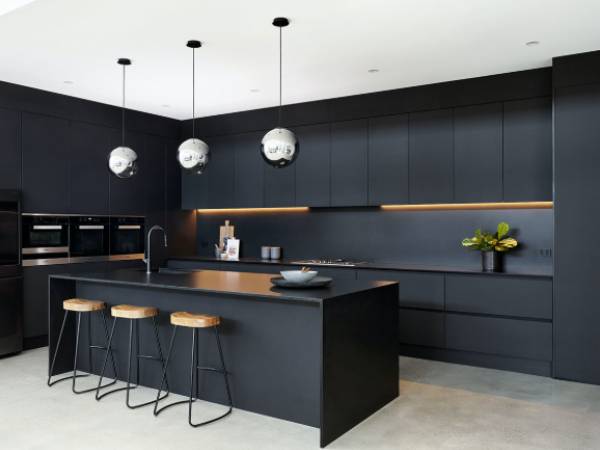
Near-solid black quartz used across a large island and perimeter countertop layout.
Check the Quartz in the Finished Color Scheme
Quartz can read differently beside cabinetry, wall finishes, flooring and metal details. Lighting can also make whites appear warmer or cooler and can change the apparent contrast of a dark surface.
When color coordination is important, compare the quartz with the main surrounding finishes rather than viewing the material in isolation.
Check Pattern Scale on Large Countertops
Calacatta-style quartz may look restrained in a small reference but show much broader movement across an island or long countertop.
Large visible pieces should be considered together with the full pattern, especially when the design includes waterfall ends, backsplashes or adjoining countertop sections.

A large kitchen island shows how vein scale and direction read across the finished surface.
Keep One Quartz Reference Across Repeated Units
Multi-unit projects often repeat the same countertop specification across apartments, hotel rooms or other interior spaces. Use the same product reference and required finish for the repeated scope unless a change is intentionally approved.
When several quartz colors are used within one project, identify which reference belongs to each room, unit type or countertop group.
Product Reference
Keep the selected quartz name or code connected to the project.
Surface Finish
Use the required finish when comparing and ordering the material.
Unit Group
Identify where each quartz selection is used in the repeated layout.
Quartz Countertop Sample FAQ
Is a small quartz sample enough?
It is useful for checking color, vein detail and finish, but larger pattern references are helpful for bold designs and large countertops.
What should be compared on a quartz sample?
Compare the background tone, vein color, contrast, pattern detail and surface finish.
Why does lighting matter when comparing quartz?
Different lighting can change how white undertones, warm details and dark surface contrast are perceived.
What should be kept consistent for multi-unit projects?
Keep the exact quartz reference and required finish connected to the repeated countertop scope.
Compare Quartz Options for Your Countertop Project
Send the preferred color direction, countertop application and approximate quantity to compare suitable quartz references.