

Kitchen Island Slab Planning: When Can One Slab Cover the Full Island?
Sep 24, 2026
Leave a message
Start with the Finished Kitchen Island Size
Whether a kitchen island can be made from one slab depends on the finished countertop size, the usable stone area and the required cutting direction.
Use the finished island dimensions rather than the cabinet size alone. Seating overhangs, sink or cooktop openings and waterfall ends can all change the amount of stone required.
Compare the Island with the Usable Slab Area
Overall slab dimensions do not always equal the full area available for the island. The finished piece must fit within the stone area selected for cutting and in the required orientation.
This is especially important with natural stone, where slab edges and movement can affect how the island is positioned.
Finished Size
Use the complete island length and width.
Usable Stone
Check the area available for the finished piece.
Orientation
Position the island to suit the material pattern.

A full natural slab shows the area and movement available for a large island.
Cutouts and Overhangs Change the Layout
| Island Feature | Effect on the Stone Layout |
|---|---|
| Sink | Changes the visible stone around the opening and its position within the slab. |
| Cooktop | Adds a large opening that must fit within the finished countertop piece. |
| Seating Overhang | Increases the countertop depth beyond the cabinet footprint. |
| Waterfall End | Adds another visible piece that may need coordinated pattern direction. |
| Exposed Edges | Identifies the sides that require finished edge work. |
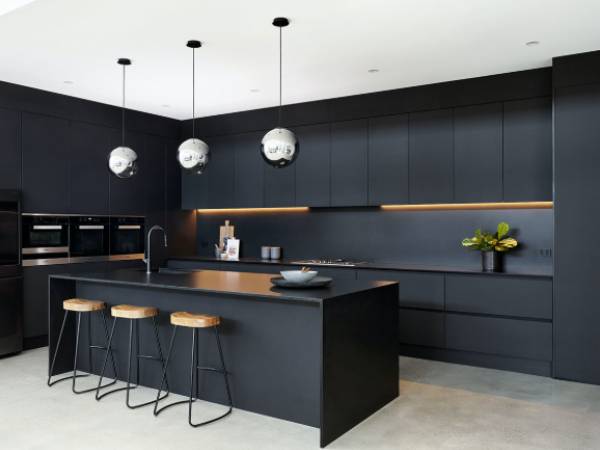
Large islands make slab size, edge and joint decisions more visible.
One Piece or a Planned Seam?
A one-piece island is possible when the complete countertop fits within the usable slab area in the required direction.
A seam may be needed when the island exceeds that area, when the preferred pattern cannot be positioned in one piece or when the design includes separate visible components.
A slab that is longer and wider than the island does not automatically guarantee a one-piece countertop. The usable area and cutting orientation still matter.
Plan the Pattern with the Island Shape
Engineered quartz follows a defined product pattern and slab format. Natural quartzite varies from slab to slab, so large islands should be planned from the selected stone.
Directional patterns can run along the island, across it or at another chosen angle. Waterfall ends and adjoining pieces should be considered with the top when the visual movement needs to connect.

Directional patterns should be considered together with the finished island shape.
Kitchen Island Slab Size FAQ
Can one slab cover a full kitchen island?
Yes, when the finished island fits within the usable slab area in the required cutting direction.
Does the cabinet size equal the countertop size?
Not always. Countertop overhangs can make the finished island larger than the cabinet footprint.
When does a kitchen island need a seam?
A seam may be required when the finished island does not fit the usable slab area or when the preferred layout uses separate pieces.
Is quartzite island planning different from quartz?
Yes. Quartzite varies naturally between slabs, while engineered quartz follows a manufactured product pattern and slab format.
Plan Your Kitchen Island Slab
Send the island dimensions, material reference, openings and waterfall details for countertop planning.