

Payload Optimization: Maximizing 20ft FCL for Wholesale Stone Importers
May 19, 2026
Leave a message
Shipping stone across the globe is not like shipping electronics or garments. In our industry, you don't pay for space; you pay for weight. For global stone importers, every cubic meter of dead space or miscalculated tonnage directly inflates the landed cost of the material.
After decades of managing heavy stone logistics at Stone Epic, we've seen buyers lose thousands of dollars simply because their suppliers didn't understand the physics of container loading. Here is exactly how a professional manufacturer engineers a 20ft Full Container Load (FCL) to maximize your profit margins while keeping you out of trouble with highway authorities.
The Battle Between "Volume Limits" and "Weight Limits"
In ocean freight, logistics professionals use two terms: "cubing out" (running out of physical space) and "weighing out" (hitting the maximum weight limit).
A standard 20ft container holds about 33 cubic meters (CBM) of volume. However, when you are shipping solid granite or quartz, you will never cube out. You will weigh out when the container is only 30% to 40% full. The maximum payload for a 20ft heavy-duty container is typically around 27 to 28 metric tons. If your factory simply shoves crates inside without a mathematical loading plan, you end up paying full freight for a container that is technically "empty" by volume but legally maxed out by weight.
Calculating Payload Based on Granite Specific Gravity
To achieve true wholesale stone container optimization, the math starts at the quarry. Not all stones weigh the same. We calculate payloads based on the Specific Gravity (SG) of the exact block we are cutting.
For instance, standard granite has an SG of around 2.7 g/cm³. This means one cubic meter weighs roughly 2,700 kg. However, highly dense materials like our Cambodia Grey can push closer to 2.8 g/cm³.
Here is the factory floor formula: Total Square Meters × Stone Thickness (m) × Specific Gravity = Net Stone Weight. If we have a strict 27-ton limit, we must deduct the tare weight of the wooden crates (usually 1.5 to 2 tons per container). This leaves us with a strict 25-ton net payload for the stone itself. Precision CNC cutting and accurate thickness calibration ensure we don't accidentally load "overweight" slabs that eat into your legal cargo limit.

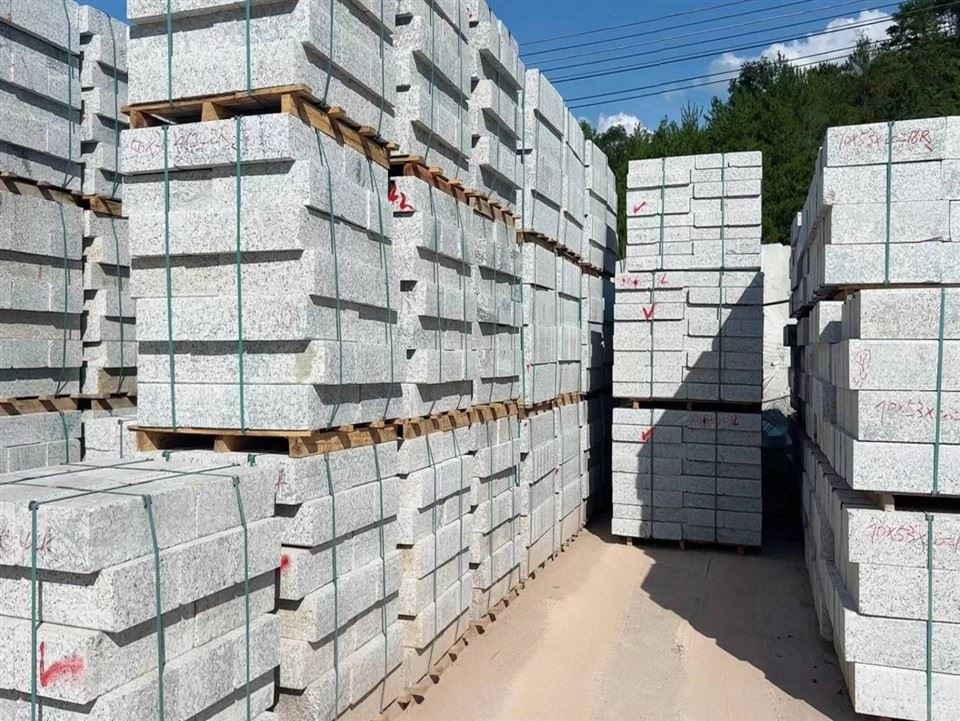
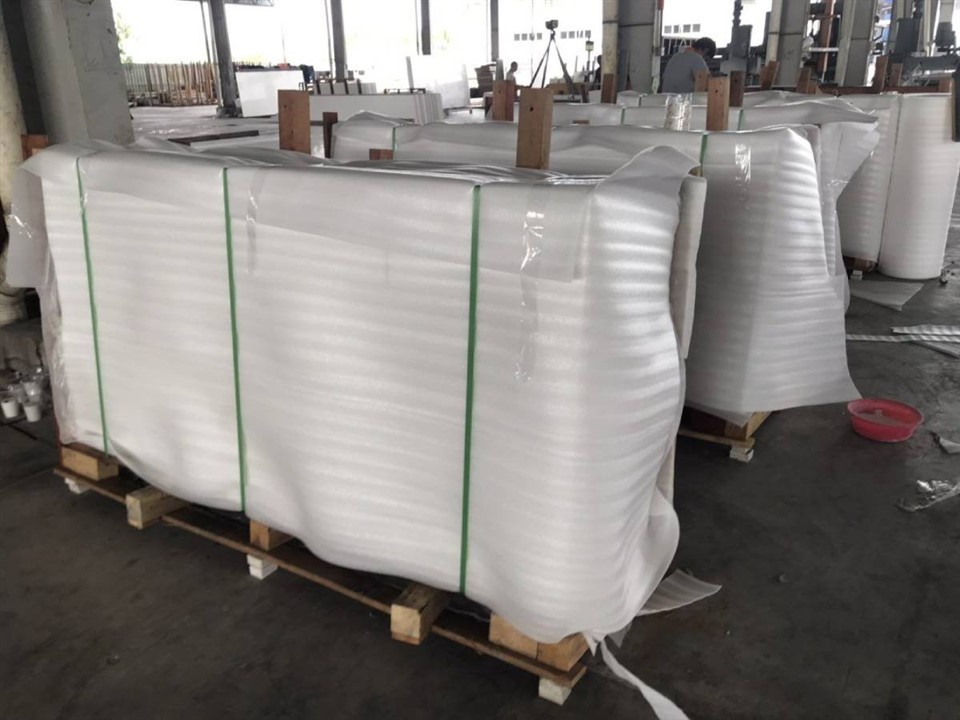
Weight Distribution and DOT Compliance
This is where many inexperienced suppliers fail. Your container might legally pass the ocean carrier's 28-ton limit, but what happens when it arrives at a port in Los Angeles or Rotterdam?
Ocean limits are not the same as road limits. In the US, the Department of Transportation (DOT) strictly enforces highway weight limits. A standard chassis cannot legally haul a 27-ton container; you often need a specialized tri-axle chassis, which costs more. If the container is loaded unevenly (e.g., heavy ledger slabs at the doors and lighter monument bases at the nose), the axle weight distribution will fail highway weigh station checks, resulting in massive fines.
At Stone Epic, we design the center of gravity (CG) before the forklift even picks up a crate. We place the heaviest A-frames dead center over the structural cross-members of the container floor and use cross-wire bracing to prevent the cargo from shifting during ocean transit.
Lowering Landed Cost via Scientific OEM Loading
Ultimately, smart logistics is a pricing strategy. Your "Landed Cost" is the factory FOB price plus freight, insurance, and duties, divided by the number of usable pieces you receive.
By employing scientific mixed-container strategies, we help distributors crush their landed costs. Instead of using unnecessarily bulky, low-grade wood that steals precious payload weight, we use high-strength, engineered ISPM-15 crates. This allows us to safely pack an extra 5% to 8% of actual stone into every single FCL without violating DOT limits.
When your OEM partner understands the math of heavy cargo, you stop paying to ship dead wood and empty air, and start paying for stone you can actually sell.