

What is an ISPM-15 Fumigated Crate for Stone Export?
Apr 27, 2026
Leave a message
In international stone logistics, the quality of the product is only as good as the crate that carries it. For importers, a failure in packaging doesn't just mean broken stone; it can mean rejected containers at customs, hefty fines, and catastrophic project delays.
Understanding the engineering and legal requirements of granite packaging is essential for any professional sourcing program. Today, Stone Epic breaks down the mechanics of the ISPM-15 fumigated crate and why it is the global standard for safe slab shipping.
International Compliance: The Vital Role of ISPM-15 in Stone Trade
ISPM-15 (International Standards for Phytosanitary Measures No. 15) is a mandatory global regulation for wood packaging materials. Its primary purpose is to prevent the international spread of timber-borne pests, such as the Asian Longhorned Beetle.
When you procure an ISPM-15 stone crate, you are ensuring that the timber has been heat-treated or fumigated with methyl bromide. Each crate must bear the "Wheat" stamp (the IPPC mark), which includes the country code and the specific treatment facility ID. In countries like the USA, UK, and Australia, non-compliant wooden crates are often denied entry and must be re-exported or destroyed at the importer's expense. At Stone Epic, we handle all fumigation protocols in-house or through certified partners, ensuring your shipment clears customs without biosecurity delays.
Structural Mechanics: A-Frame vs. Enclosed Crate Load-Bearing Analysis
The choice of structural design depends entirely on the stone's dimensions and its vulnerability to torsional stress.
- The A-Frame (Vertical Loading): This is the industry standard for large-format slabs. By leaning slabs at a specific angle (typically 75–80 degrees) against a central A-shaped timber spine, the weight is distributed toward the center of gravity. This prevents the "pancake effect" and protects the slabs from snapping due to the vertical vibrations of a vessel.
- The Enclosed Crate (Horizontal/Vertical Compact): For tiles, cut-to-size projects, or monuments, we utilize heavy-duty enclosed crates. The mechanical advantage here lies in compression. By tightly packing the stone units, we eliminate the space that allows for movement.
We analyze the specific density and center of gravity for every order, ensuring the base beams are thick enough (often 80x80mm or larger) to support the concentrated weight without buckling during forklift handling.
Our factory & quipment
Lorem ipsum dolor sit, amet consectetur adipisicing elit.
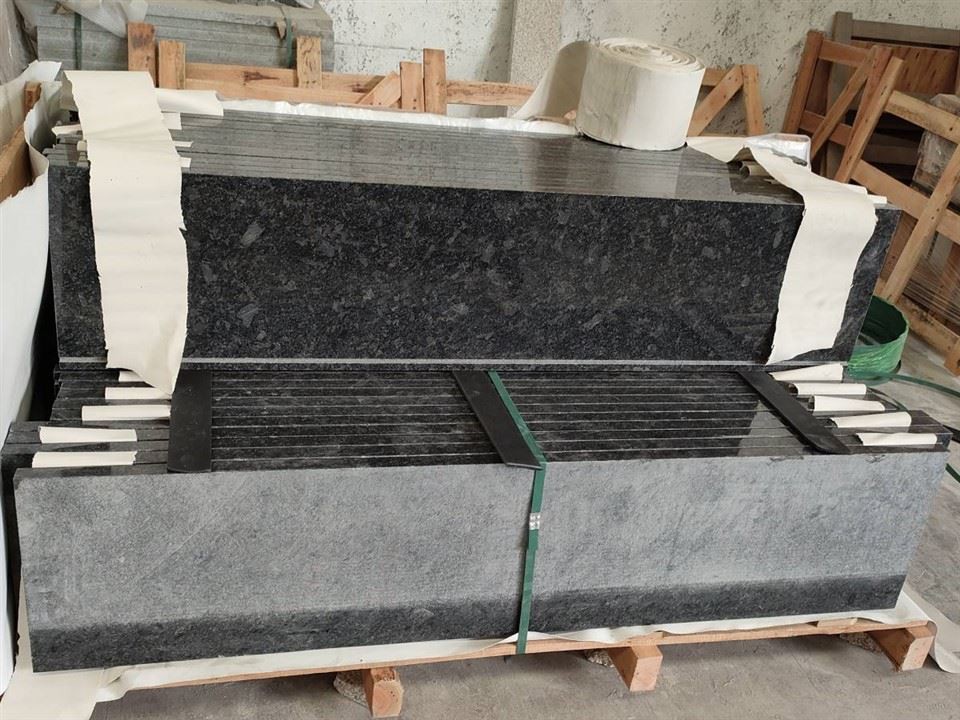
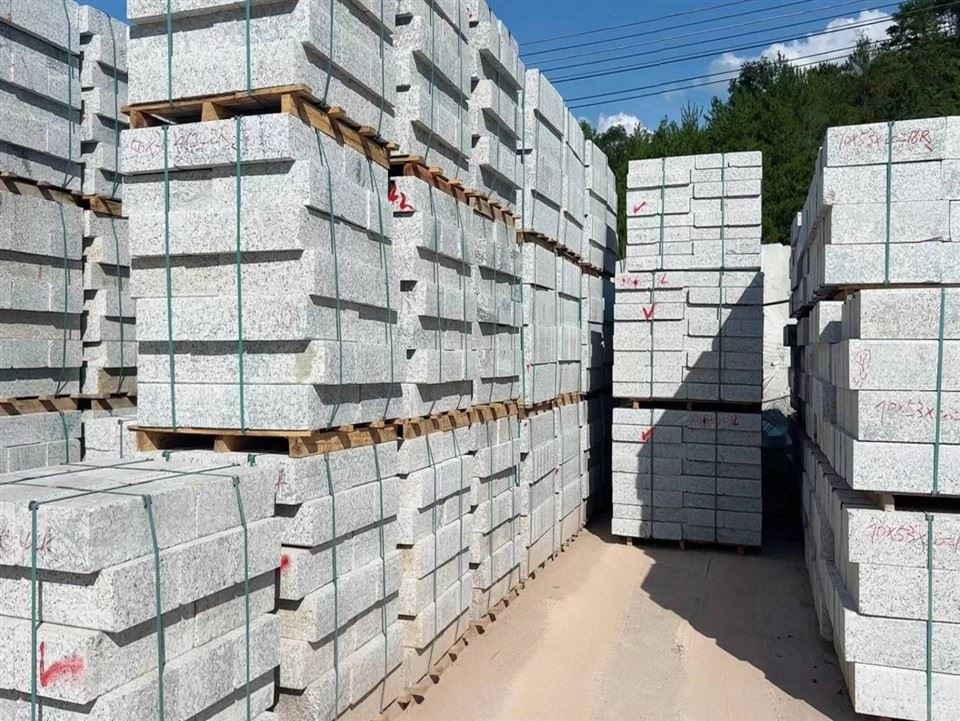

Internal Protection: High-Density Foam and Steel Reinforcement
A crate is only the outer shell; the internal engineering is what prevents breakage. During sea transit, a container undergoes constant "pitch and roll" movements.
To achieve safe slab shipping, Stone Epic utilizes a multi-layered internal protection strategy:
- High-Density PE Foam: We place foam dividers between every polished face. This prevents surface friction and "polishing burns" caused by the stones rubbing together.
- Edge Protectors: Reinforced plastic or cardboard corners are applied to prevent the timber from chipping the delicate edges of the stone under the pressure of the straps.
- Steel Wire & PET Banding: We don't just rely on nails. Our crates are double-banded with high-tensile steel or PET strapping. In many cases, we also utilize steel wire rodding to anchor the crates directly to the container floor, preventing the entire payload from shifting during heavy storms at sea.
Zero-Breakage Standards: The Stone Epic Packaging Protocol
At Stone Epic, we view packaging as an extension of our quality control. We do not use "commercial grade" scrap wood. We utilize premium, heavy-timber pine or hardwood that has been kiln-dried to prevent warping.
Our granite packaging protocol includes a final "pre-shipment assembly" check. We verify that the crate dimensions match the payload exactly, ensuring there is zero internal "wiggle room." For oversized ledger slabs or delicate monuments, we build custom-reinforced pallets with extra-wide runners to ensure stability during the aggressive handling typical of international port terminals. When you source from Stone Epic, you are investing in a supply chain that prioritizes the "Last Mile" just as much as the first cut.