

5-Axis CNC Profiling for Radial Granite Exterior Cladding
Aug 03, 2026
Leave a message
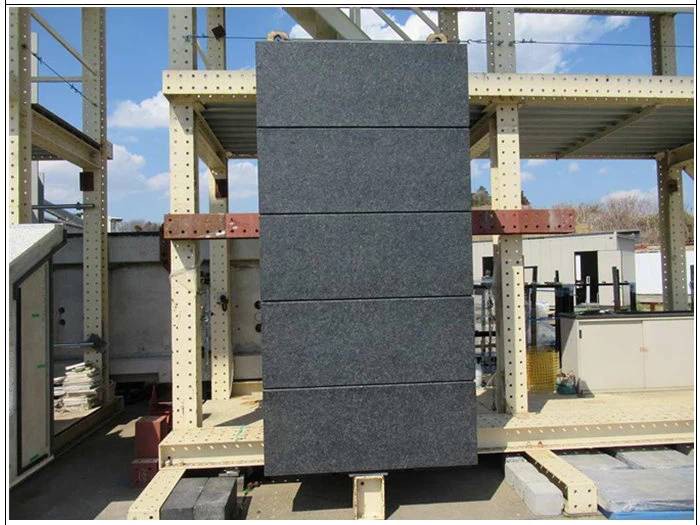
Executing a curved stone facade requires exact 3D geometric alignment to prevent dead-weight structural failure in curtain-wall dry-hanging applications. By deploying 5-Axis CNC bridge saws, our engineering team converts 2D CAD slices into precise radial toolpaths, achieving a strict <1.0mm tolerance for back-anchor kerf cutting and ensuring flush architectural continuity without mechanical stress.
Translating 2D CAD to CNC Radial Toolpaths
Modern commercial complexes frequently feature radial elevations that challenge standard dimensional stone processing. Relying on manual profiling to shape irregular granite creates geometric deviations. When on-site installers attempt to force-fit uneven radial panels onto a rigid aluminum substructure, the generated kinetic stress inevitably causes hairline fractures and catastrophic panel detachment under heavy wind loads.
Our China Factory eliminates manual geometric estimation. For heavy commercial granite fabrication, we import the architect's 2D CAD section profiles directly into our CAM software. The system generates precise 3D radial toolpaths. Heavy-duty 5-Axis CNC routers then mill the exact inner and outer radius directly from solid granite blocks. This automated subtractive manufacturing guarantees absolute geometric symmetry across thousands of square meters of curved exterior cladding.
Kerf Cutting Tolerances for Stainless Steel Z-Clips
A flawless outward radius is useless if the hidden anchoring mechanics fail. Curved panels require mechanical back-anchoring to secure the massive specific gravity of the igneous rock to the building's skeleton. If the anchor slots (kerf cuts) are misaligned by a fraction of a degree, the stainless steel Z-clips will bind, transferring structural loads incorrectly.
We enforce a strict mechanical fastening protocol. While the panel is locked on the 5-Axis CNC bed, the router executes automated reverse-angle kerf cutting into the back of the radial granite cladding. This synchronized operation restricts the anchor slot tolerance to strictly <1.0mm. On the job site, mechanics simply slide the Z-clips into these exact recesses, locking the panel directly to the grid without relying on degrading epoxy resin.
| Engineering Variable | Manual Radial Profiling | 5-Axis CNC Radial Toolpaths (China Factory) | Dry-Hang Structural Impact |
| Geometric Radius Tolerance | ± 3.0 mm | < 1.0 mm | Eliminates surface lippage across curved elevations |
| Z-Clip Kerf Cut Alignment | High variance; field modifications required | Exact CAD-plotted coordinates | Ensures zero-stress mechanical lock to aluminum grids |
| Mechanical Stress | Force-fitting creates concentrated kinetic tension | Flush fit generates zero internal tension | Prevents wind-load fracturing and anchor tear-out |
| Production Methodology | Segmented flat-cutting & grinding | Direct solid block radial milling | Maximizes specific gravity integrity of the stone |
Our products

Single-Quarry Block Sourcing for Zero Color Variation
Assembling a massive curved elevation exposes any background shade variances, commonly referred to as yin-yang faces. Fragmented spot-market buying for mega-projects guarantees mismatched biotite distribution, triggering immediate rejection by the landscape architect.
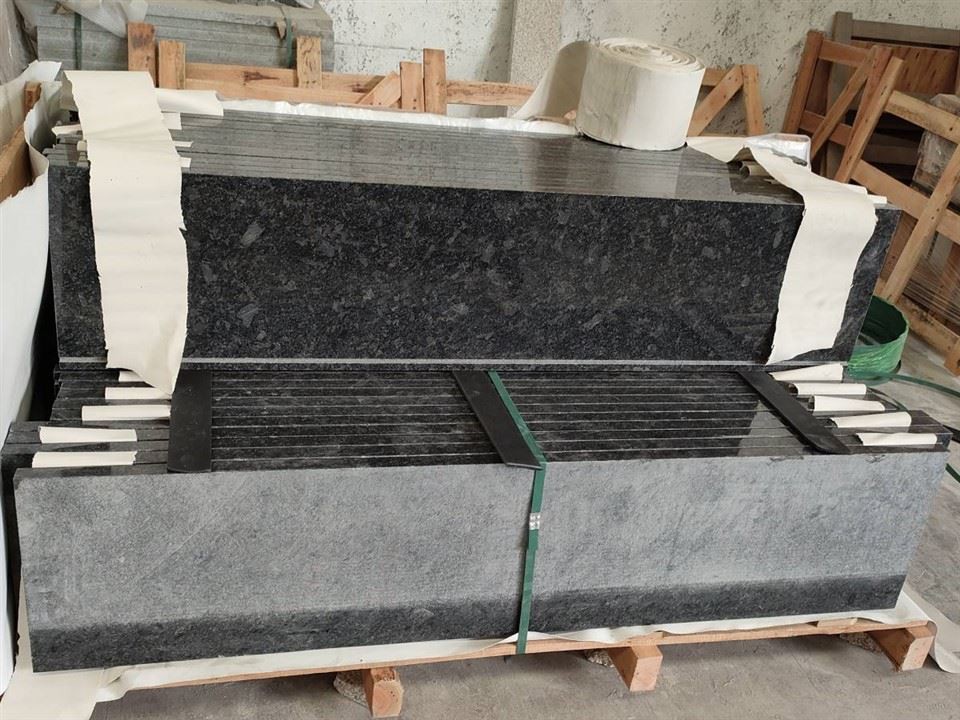
As a direct-to-site fabricator, our China facility executes single-quarry block buyouts. We extract and slice massive volumes of raw blocks on our high-capacity gang-saws from the exact same geological bench. Following the CNC radial profiling, every panel undergoes a 100% Dry-Lay protocol on the factory floor to map the continuous radius and verify exact vein-matching. The approved components are then secured in heavy-duty ISPM-15 timber crates utilizing Cross-Wire Bracing, locking in your FOB price advantages and delivering absolute visual uniformity to the site.
Procurement FAQs
Q: What is the machining tolerance for CNC radial granite cladding?
A: Our China Factory utilizes 5-Axis CNC bridge saws to mill radial panels with a strict dimensional tolerance of <1.0mm. This exact calibration prevents surface lippage and eliminates the kinetic stress associated with force-fitting curved panels onto rigid architectural curtain-wall grids.
Q: How do you execute kerf cutting on curved stone facades?
A: We program the 5-Axis CNC to execute reverse-angle kerf cutting directly into the back of the curved granite panels. This automated process ensures the anchor slots align perfectly with the architectural drawings, allowing stainless steel Z-clips to engage without binding or mechanical fatigue.
Q: How do you prevent color shading in large commercial granite fabrication?
A: We secure absolute color consistency by executing single-quarry block buyouts. We process the raw material simultaneously on industrial gang-saws and verify 100% vein-matching through a physical Dry-Lay assembly before securing the panels into ISPM-15 fumigated crates.
Eliminate geometric deviations and installation stress on your next curved facade project. Contact our Engineering Department today to submit your 2D CAD files for a radial toolpath review, request our Z-clip tolerance specifications, or secure a direct FOB quotation from our high-capacity China factory.