

Maximizing Yield Rates in Commercial Cut-to-Size Granite Projects
May 29, 2026
Leave a message
How Yield Rate Determines Final Profit Margins in Large Multi-Family Apartment Projects
For general contractors (GCs) and developers managing large-scale multi-family apartment complexes or hospitality projects (often exceeding 300 units), stone countertops represent a massive portion of the procurement budget. In these commercial cut-to-size granite projects, the most easily overlooked-yet most destructive-margin killer is material waste.
Many B2B buyers and procurement managers fixate entirely on the raw slab price per square foot, completely neglecting the yield rate. Yield rate is the percentage of the raw stone slab that actually makes it into the final installed product. Consider this scenario: if the standard yield rate for a batch of granite slabs is 70%, but poor CAD planning or outdated fabrication methods drop that yield to 60%, the financial impact is devastating. It means for every 10 full containers (FCL) of stone you purchase, one entire container of material-and the capital spent on it-is thrown directly into the factory scrap bin.
In the highly competitive bidding environment of large-scale construction, profitability hinges on microscopic cost controls. Elevating the yield rate by just 5% to 10% can salvage the profit margins of an entire project section. A professional direct stone manufacturer understands that minimizing waste at the source is the ultimate strategy for protecting a client's bottom line.
The Application of Digital Nesting Software in Reducing Stone Waste
In the past, factory workers relied on chalk lines and manual measurements to layout cuts on a slab. This artisanal approach is highly dependent on individual human experience, deeply inefficient, and inevitably produces an unacceptable volume of offcuts and scrap. Commercial volume orders simply cannot rely on workshop-era methods.
Today, when overseas architectural drawings enter our production line, the first step is importing them into advanced Digital Nesting Software. The system utilizes high-definition digital scans of every single raw slab. The software's algorithms then automatically arrange the specific dimensions for kitchen islands, vanity tops, and backsplashes, fitting them together like a highly optimized puzzle across the usable surface area of the stone.
Beyond just geometric optimization, this digital nesting process automatically identifies and avoids the natural defects inherent in stone-such as unwanted biotite clusters, micro-cracks, or unstable fissures. By combining defect avoidance with algorithmic spatial planning, the software consistently pushes the maximum yield rate above 85%. This digital-first, pre-fabrication layout guarantees that every inch of material the buyer pays for is utilized effectively, eliminating the bloated costs associated with unnecessary scrap.
Our products
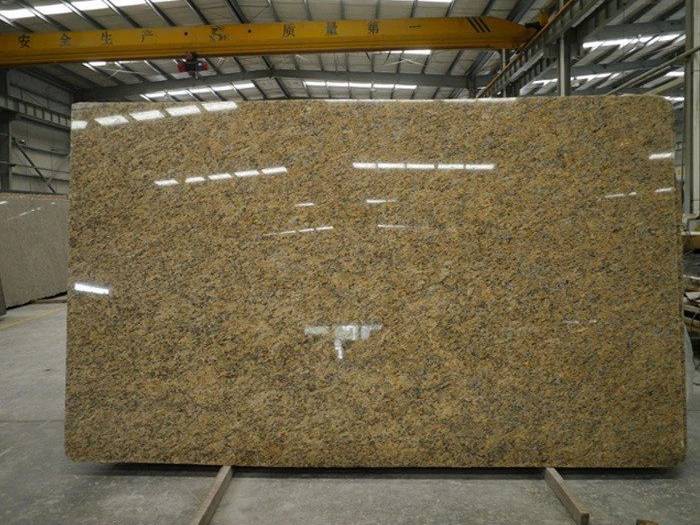
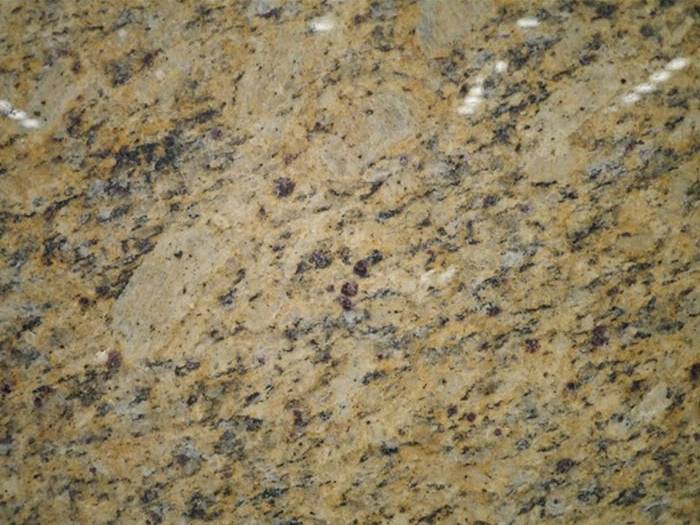
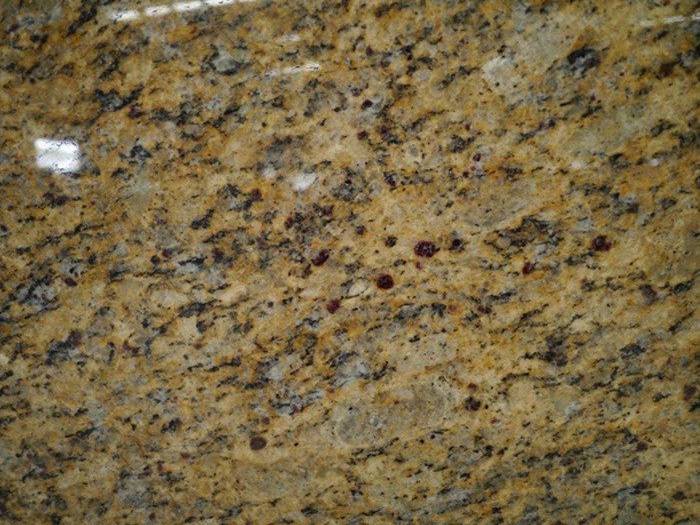
Vein-Matching for Slabs with Natural Patterns (e.g., Santa Cecilia Light)
Materials like Santa Cecilia Light remain a dominant force in North American commercial real estate, ranking among the most highly requested Level 1 granite countertops for Class B and Class C apartment renovations due to their extreme durability and cost-effectiveness. However, these natural stones feature distinct, flowing directional veins, which introduce a complex yield challenge: how do you maximize material usage without destroying the visual flow of the stone?
If a factory cuts solely for maximum yield without factoring in pattern alignment, the resulting seams on L-shaped counters or waterfall edges will look disjointed and chaotic. In commercial projects, poor aesthetics directly lead to rejected installations, failed site inspections, and costly punch-list rework.
During the digital nesting phase, engineers must forcefully intervene to conduct vein-matching. By using advanced CAD software, the team can visually align the grain direction across multiple intersecting pieces. We scientifically calculate the exact point where sacrificing a fractional amount of offcut material guarantees that the natural veins flow seamlessly across the installed countertops. This meticulous process not only controls bulk manufacturing costs but vigorously protects the high-end aesthetic delivery of the final commercial project.
How a Commercial Granite Fabricator Saves GCs Money Through Value Engineering
An exceptional commercial granite fabricator is never just a passive cutting facility; their true value lies in "Value Engineering" during the drawing conversion phase.
General contractors and interior design firms frequently produce CAD drawings based entirely on spatial aesthetics, often with zero awareness of upstream raw material physical constraints. For instance, an architect might specify a kitchen island depth of 38 inches. However, because standard granite blocks and slabs have fixed maximum dimensions, cutting a 38-inch piece might leave a 22-inch strip of residual stone that is completely useless for the rest of the project. That single design choice effectively forces the yield rate down to 60%.
When a professional fabrication team detects these architectural inefficiencies, they immediately propose size optimization strategies to the buyer. By suggesting a slight modification-such as reducing the island depth from 38 inches to 36 inches-the factory can suddenly nest two islands side-by-side on a single slab. The end-user will never notice a 2-inch difference in their apartment, but the GC will instantly see a 15% to 20% reduction in the total cost per unit. When executing B2B procurement, you are not simply buying stone; you are investing in a supply chain's ability to engineer extreme cost efficiency.