

Just-In-Time (JIT) Stone Delivery for Mega Commercial Developments
Jul 14, 2026
Leave a message

Just-In-Time (JIT) stone delivery eliminates on-site storage bottlenecks for mega commercial developments by synchronizing direct factory procurement with construction Gantt charts. This staggered stone delivery model reduces material handling damage by 40% and ensures strict color consistency across 100,000+ sq.m. projects through centralized block buyouts and pre-numbered dry-lay protocols.
The Spatial Bottleneck of Mega Commercial Developments
In dense urban cores, mega commercial developments-such as 1,000-unit multi-family apartment complexes or high-rise hospitality projects-face a severe spatial constraint: zero laydown area. Traditional bulk stone delivery forces general contractors to rent off-site warehousing or stack ISPM-15 fumigated crates in active fire lanes.
This spatial bottleneck triggers a cascade of costly inefficiencies. Union labor is forced into double-handling or triple-handling materials (moving stone from the truck to a temporary yard, then to the hoist, and finally to the installation floor). Every touchpoint increases the risk of transit fractures, edge chipping, and schedule delays. For a commercial stone supply chain, delivering 50 containers on day one is a logistical failure; delivering 50 containers precisely when the 5th-floor drywall is ready is a logistical triumph.
From Batch Manufacturing to Staggered Deliveries: Factory Buffer Capacity
Transitioning from batch manufacturing to staggered stone delivery requires the direct factory procurement partner to act as a physical buffer, not just a production node.
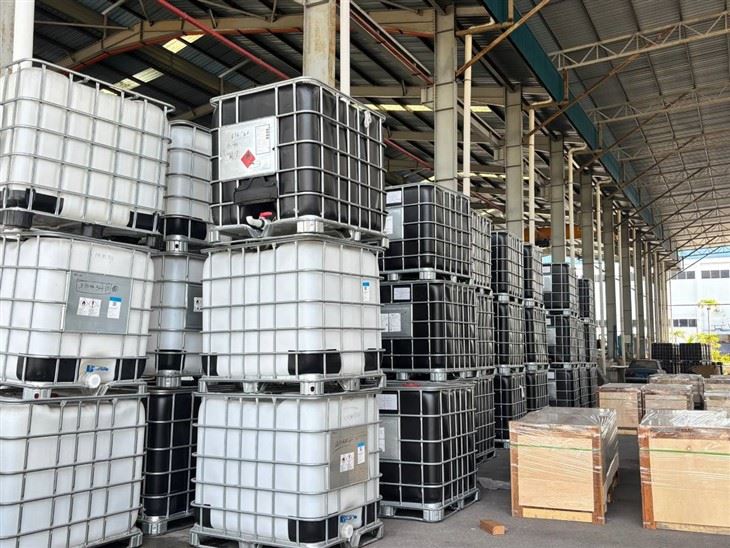
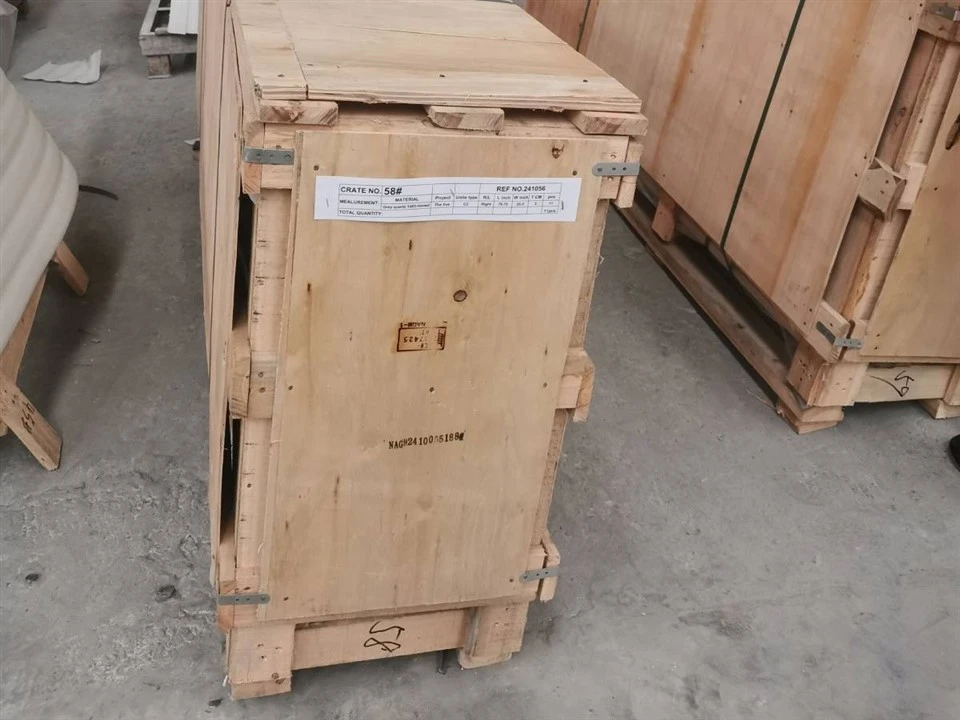
Whether sourcing heavy granite exterior cladding from our China processing hub or tariff-free quartz slabs from Malaysia In Quartz Stone SDN.BHD., our facility maintains a dedicated climate-controlled staging zone for active mega-projects. Once the stone is fabricated, calibrated, and packed in A-frames or heavy-timber crates, it does not immediately enter the ocean freight stream. Instead, it is held in our factory buffer.
We release the FCLs (Full Container Loads) in sequenced waves based on the site's weekly pull signals. This warehouse buffering capability absorbs the volatility of global port congestions and ensures that the general contractor receives exactly 3 to 5 containers per week, matching the exact installation velocity of the site crew.
Digital Synchronization: Binding Factory Production to Contractor Gantt Charts
Effective JIT scheduling requires moving beyond email-based tracking and integrating the factory's ERP system directly with the general contractor's Primavera P6 or MS Project Gantt charts.
The digital binding process works as follows:
- Milestone Mapping: The production schedule for CNC cutting, edge profiling, and gang-saw slicing is reverse-engineered from the site's floor-pouring and dry-in dates.
- Cut-Sequence Optimization: For complex vein-matching or book-matched feature walls, the digital nesting software sequences the slab cutting order to match the exact installation sequence (e.g., Floors 1-5 first, then Floors 6-10).
- Automated Dispatch Triggers: When the GC updates the Gantt chart to confirm a floor is ready for stone, the factory's logistics module automatically generates the packing list, books the inland drayage, and triggers the customs clearance process.
- This deep digital synchronization transforms the commercial stone supply chain from a reactive vendor relationship into a proactive extension of the construction management team.

Mitigating Color Shading in Multi-Batch Shipments: Block Buyouts & Dry-Lay
The most critical risk in staggered stone delivery is color shading (color variation) across multiple production batches. Natural stone is a geological product; cutting from a new block strata three months later will inevitably yield slight tonal shifts.
To guarantee visual continuity across a 12-month staggered delivery schedule, we enforce strict geological and mechanical controls:
- Centralized Block Buyouts: At the project's inception, we secure and purchase the entire required volume of raw blocks from a single, stable quarry strata. These blocks are stored in our yard and sliced sequentially over the project's lifecycle.
- Pre-Numbered Dry-Lay Protocol: Before any slab is packed into the ISPM-15 crate, it undergoes a factory dry-lay inspection. Each slab is assigned a unique, weather-proof barcode sticker indicating its exact installation coordinate (e.g., Level 4 - Unit 402 - Kitchen Island - Slab 2 of 3).
- Sequential Batching: The loading plan strictly follows the numerical sequence. Installers simply follow the sticker numbers, ensuring that adjacent slabs in the final architectural application were cut from the exact same section of the original master block.
|
Metric |
Traditional Bulk Delivery |
JIT Staggered Delivery |
|---|---|---|
|
On-Site Storage |
Requires 20% of total volume laydown |
Near-zero laydown footprint |
|
Material Handling |
High (3-4 touches by union labor) |
Low (1-2 touches, direct to install) |
|
Breakage Risk |
> 5% due to double-handling |
< 1.5% (Direct to installation floor) |
|
Color Consistency |
High risk of batch variation |
Guaranteed via single block buyout |
|
Working Capital |
High (GC pays for all materials upfront) |
Optimized (Pay-as-you-install draw schedule) |
For a detailed breakdown of our logistics execution and payload engineering on recent high-rise builds, review our Mega Commercial Project References.
Buyer FAQs
Q: How do you manage color consistency across staggered stone delivery for a 12-month project?
A: We execute a centralized block buyout at the project's inception, securing all raw material from a single quarry strata. The blocks are stored in our yard and sliced sequentially. Every slab undergoes a factory dry-lay and is assigned a weather-proof coordinate sticker, ensuring adjacent installed slabs originate from the exact same master block section.
Q: What is the minimum buffer time required at the direct factory procurement stage before dispatch?
A: Our standard protocol requires a 14-day physical buffer at the factory staging zone after final QC and ISPM-15 packaging. This window allows us to align the physical cargo with the general contractor's updated Gantt chart, secure optimal ocean freight routing, and absorb any minor delays in site readiness without incurring demurrage charges at the destination port.
Q: How does JIT scheduling affect the ISPM-15 packaging integrity during long-term warehouse storage?
A: Our factory buffer zone is climate-controlled and elevated. The ISPM-15 radiata pine crates and A-frames are treated for phytosanitary compliance prior to packing. Because the stone is fully sealed in PE foam and the crates are protected from UV and moisture degradation, the packaging integrity remains 100% compliant for up to 6 months of staged storage without requiring re-fumigation.
Optimize Your Project Logistics Today Stop paying for double-handling and on-site storage. Partner with a direct factory procurement team that understands construction Gantt charts and payload engineering. Contact Our Engineering Team to download our JIT Scheduling Matrix and request a 3D Container Loading Plan for your next mega commercial development.