

Malaysian Quartz vs Chinese Quartz: A B2B Buyer's Guide
Mar 27, 2026
Leave a message
For years, the global supply chain for engineered stone was simple: you bought from China. Today, geopolitical tariffs and shifting manufacturing hubs have completely rewritten the rules for quartz countertops sourcing.
If you are a wholesale distributor, fabricator, or project developer, deciding between Southeast Asia and China is the most critical purchasing decision you will make this year. As a direct manufacturer operating facilities in both regions, Stone Epic offers an unfiltered, behind-the-scenes look at the real differences in the Malaysian quartz vs Chinese quartz debate.
The Macro Comparison: Price, Tariffs, and Tech
To make an informed sourcing decision, you must look past the FOB price and analyze the true landed cost.
- The Tariff Reality (AD/CVD): The biggest disruptor is the US Anti-Dumping and Countervailing Duties (AD/CVD). For US-based buyers, importing quartz from China means facing tariffs that can exceed 300%, effectively killing any profit margin. Malaysia, however, operates under a completely different trade agreement, offering a 100% legal, tariff-free route to the US market.
- Pricing Structures: If we remove tariffs from the equation, Chinese quartz still holds a slight edge in raw FOB pricing due to massive economies of scale. However, the gap is closing rapidly. Malaysian factories have scaled up production, making their prices highly competitive for global buyers and unbeatable for US importers.
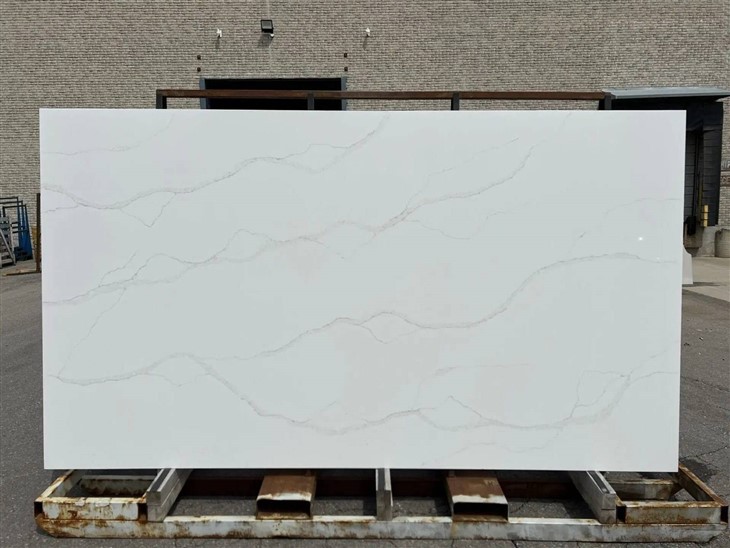
- Production Technology: China has historically held the crown for advanced replication of complex natural stones (like intricate Calacatta veins). But the landscape has shifted. Top-tier Malaysian factories are not using outdated equipment; they are heavily backed by imported high-tonnage Italian or top-spec Chinese pressing lines.
| Feature | Chinese Quartz Slabs | Malaysian Quartz Slabs |
| US Tariff Status | High AD/CVD (Often >300%) | Tariff-Free (100% Compliant) |
| FOB Pricing | Highly Competitive | Very Competitive |
| Design Variety | Massive (Thousands of complex patterns) | Excellent (Focus on high-demand Calacatta/Carrara/Whites) |
| Production Scale | Industry Leader | Rapidly Maturing & Expanding |
Quality Control & Raw Materials: Is Malaysia Mature?
A common question from skeptical B2B buyers is: "I know Malaysia avoids tariffs, but is their raw material supply and pressing tech actually good enough?"
The Objective Answer: Yes, but you must vet the factory.
Raw Material Supply: Engineered stone is 93% quartz sand. Malaysia actually boasts excellent domestic reserves of high-quality, high-purity silica sand. For ultra-premium pure white or specific Calacatta designs, established Malaysian factories (like Stone Epic) will strategically import premium bleached sand to ensure the background color never looks muddy or yellow.
Pressing Technology: The danger in emerging markets is "shell factories" using low-pressure machines. A high-quality slab requires heavy-duty vacuum vibro-compaction. If a factory uses a weak press, the slab will have microscopic air voids (pinholes), making it porous and prone to cracking during CNC fabrication. Stone Epic's Malaysia facility operates industrial-grade presses specifically calibrated to match the density and structural integrity of the best Chinese slabs.
Our Products
Target Market Match: Which Should You Choose?
Your geographical location should dictate your sourcing strategy for wholesale quartz slabs.
For North American Buyers (USA & Canada): Sourcing from Malaysia is not just an option; it is a necessity. The landed cost of Chinese quartz makes it unviable for large-scale multi-family housing or commercial projects. A legitimate Malaysian factory allows you to import premium Calacatta designs safely, legally, and profitably.
For Buyers in Non-Tariff Regions (Europe, Middle East, Asia, South America): If your country does not impose punitive tariffs on Chinese engineered stone, China remains an incredible sourcing hub. The sheer volume of manufacturing capability in China means you have access to limitless custom designs, rapid lead times for massive project rollouts, and highly aggressive pricing.
Procurement Advice: Locking Down Tolerance and Color
Whether you are importing from our Malaysian lines to bypass US tariffs or utilizing our Chinese facilities for global projects, B2B buyers must enforce strict QC standards. Here is how professional importers protect their investments:
- Demand Strict Thickness Tolerance: Do not accept slabs with a +/- 2mm or 3mm variance. This will cause a nightmare for your fabricators when seaming pieces together. Specify a strict +/- 1mm thickness calibration in your purchase contract.
- Control Color Variation (Batching): Even engineered stone can have slight tonal shifts between resin batches. For large commercial projects (e.g., a 300-room hotel), mandate that the factory produces your entire order in a single, continuous run. At Stone Epic, we label and bundle slabs by exact batch numbers to guarantee a uniform installation.
- Verify the Polish: Use a gloss meter. For solid whites, expect a glossiness degree around 50+. For darks and veined designs, it should push past 90+.
Secure Your Supply Chain with Stone Epic
Navigating the global stone market requires a partner with a strategic, multi-region footprint. Whether you need tariff-free quartz from Malaysia or precision-cut granite from China, we have the infrastructure to support your wholesale business.
[ Contact the Stone Epic team today ] to discuss your market requirements, request sample boxes, or get a live CIF quote for your next container.