

How Quartz Countertops Improve Hygiene in Commercial Kitchens
Dec 26, 2025
Leave a message
Hygiene is a critical requirement in commercial kitchens, food processing facilities, and catering environments. Work surfaces must not only withstand heavy daily use but also support strict sanitation standards. For these reasons, quartz countertops have become an increasingly common choice in professional kitchens where cleanliness, durability, and compliance are essential.
This article explains how quartz countertops contribute to improved hygiene and why they are well suited for commercial food-related applications.
Non-Porous Structure: A Key Hygiene Advantage
One of the defining features of quartz countertops is their non-porous composition. Unlike natural stones such as marble or granite, quartz surfaces do not absorb liquids, oils, or food residues.
This characteristic prevents:
Bacterial growth within the surface
Absorption of food stains and odors
Moisture penetration that can lead to hidden contamination
In busy commercial kitchens, this non-porous structure significantly reduces the risk of cross-contamination.
Resistance to Bacteria and Mold
Quartz countertops are engineered using high-density quartz particles bonded with advanced resins. This creates a compact surface that does not provide the micro-spaces bacteria and mold require to grow.
When cleaned properly, quartz surfaces maintain a hygienic environment suitable for:
Food preparation stations
Commercial baking and pastry areas
Beverage and service counters
Some quartz products are also manufactured with additional antimicrobial technologies, further enhancing hygiene performance.
Easy Cleaning and Sanitization
Daily cleaning routines are essential in commercial kitchens. Quartz countertops support efficient sanitation without the need for harsh chemicals or complex procedures.
Recommended cleaning practices include:
Warm water and mild detergent for daily cleaning
Non-abrasive cloths or pads
Approved food-safe disinfectants when required
Because quartz does not require sealing, there is no risk of sealant degradation that could compromise hygiene over time.

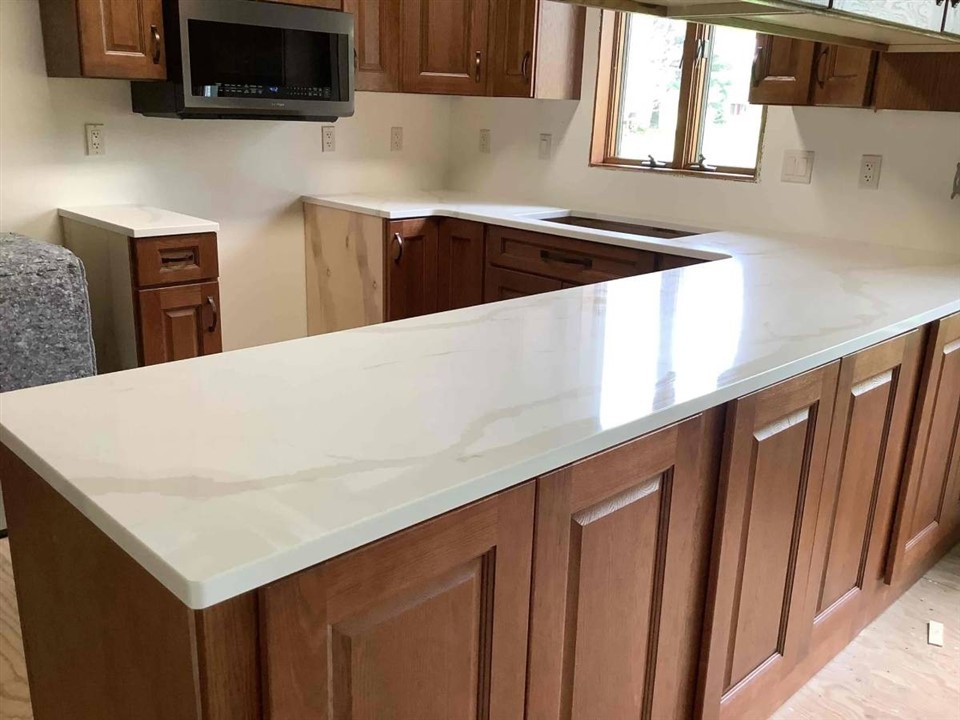

Performance in High-Traffic Food Service Environments
Commercial kitchens experience constant exposure to moisture, food acids, oils, and cleaning agents. Quartz countertops perform reliably under these conditions due to their:
High resistance to staining
Strong surface integrity under frequent cleaning
Consistent appearance despite heavy use
This makes quartz suitable for restaurants, hotel kitchens, catering facilities, and institutional food services.
Quartz vs Natural Stone in Hygiene-Sensitive Applications
Marble
Porous and prone to staining
Sensitive to acids
Requires frequent sealing
Granite
Less porous than marble but still absorbent
Needs regular sealing to maintain hygiene
Quartz
Non-porous and seal-free
Consistent hygiene performance
Lower long-term maintenance requirements
For commercial kitchens, quartz offers a more predictable and compliant hygienic countertop solution.
Compliance with Food Safety Standards
While countertop materials alone do not guarantee compliance, quartz supports adherence to common food safety and hygiene regulations when properly installed and maintained. Smooth joints, sealed seams, and professional fabrication further enhance sanitary performance.
Specifiers and buyers often select commercial quartz countertops to align with industry expectations for cleanable and durable surfaces.
Quartz countertops improve hygiene in commercial kitchens by combining a non-porous structure with ease of cleaning and long-term durability. Their resistance to bacteria, stains, and moisture makes them a practical choice for food preparation environments where sanitation is a priority. For buyers seeking a hygienic countertop solution with consistent performance, quartz remains one of the most reliable options available.