

What Is Engineered Quartz Stone?
Mar 19, 2026
Leave a message
In today's construction and interior projects, material selection is no longer just about appearance-it's about consistency, performance, and long-term cost control. This is why engineered quartz has become a mainstream choice for developers, contractors, and distributors.
Unlike natural stone, quartz stone is manufactured under controlled conditions, which allows it to deliver stable quality across large orders. For buyers working on hotels, apartments, or commercial spaces, that reliability is often more important than the material itself.
Definition
Engineered quartz is a man-made stone composed primarily of natural quartz crystals combined with resin binders and pigments. The result is a dense, non-porous surface designed for durability and visual consistency.
Typically, engineered quartz contains:
- 90–95% natural quartz
- 5–10% resin and additives
- Controlled pigments for color and pattern
This composition allows manufacturers to produce slabs that replicate the look of natural stone while eliminating many of its inconsistencies.
Manufacturing Process
The performance of engineered quartz depends heavily on how it is produced. While different factories may vary slightly, the core process generally follows these steps:
1. Raw Material Preparation
Natural quartz is crushed into different particle sizes. These are blended with resin and pigments to achieve the desired color and pattern.
2. Mixing and Molding
The mixture is poured into molds and evenly distributed to form slabs.
3. Vacuum Compression
Air is removed under vacuum conditions while the slab is compressed under high pressure. This step is critical for eliminating internal voids and improving density.
4. High-Temperature Curing
The slab is heated to harden the resin and bind the materials together permanently.
5. Surface Processing
After curing, slabs are calibrated, polished, or textured depending on the final application.
Because this process is controlled from start to finish, engineered quartz offers a level of consistency that natural stone cannot guarantee-especially in large project orders.
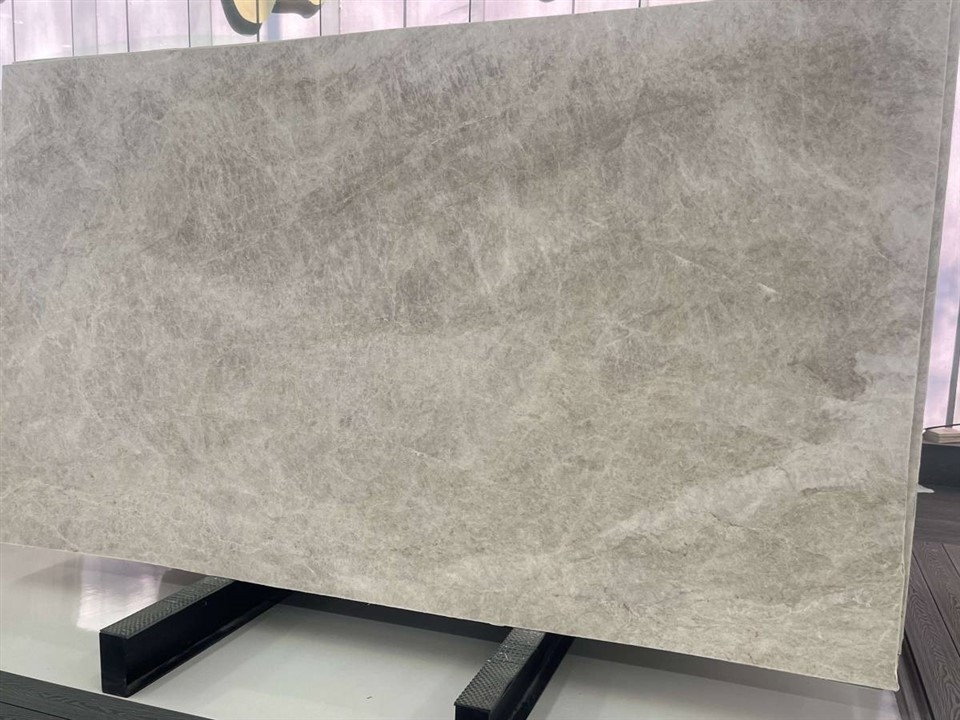
Key Properties
From a buyer's perspective, engineered quartz is valued for how it performs in real-world use, not just how it looks.
1. Non-Porous Structure
Quartz surfaces do not absorb liquids, which makes them resistant to staining and easy to clean.
2. Consistent Appearance
Color and pattern can be controlled across batches, which is essential for projects requiring uniformity.
3. High Durability
Quartz is resistant to scratches and daily wear, making it suitable for high-traffic environments.
4. Low Maintenance
Unlike some natural stones, quartz does not require sealing or special treatment.
5. Stable Thickness and Flatness
Engineered production ensures dimensional accuracy, which improves installation efficiency.
These properties make quartz particularly suitable for commercial and multi-unit residential applications.
Applications
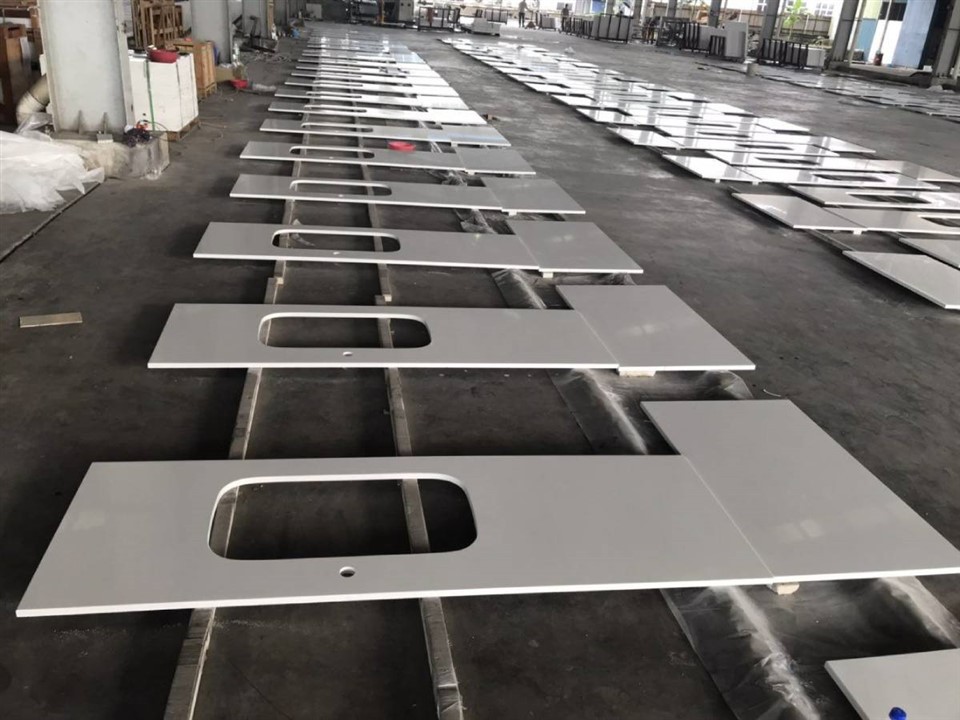
Engineered quartz is widely used beyond residential kitchens. Its controlled performance makes it a practical solution across multiple sectors.
Residential Use
- Kitchen countertops
- Bathroom vanities
- Window sills
Commercial Projects
- Hotel bathrooms and worktops
- Retail counters
- Office surfaces
Large-Scale Developments
- Apartment projects
- Student housing
- Prefabricated countertop systems
For project buyers, the key advantage is not just versatility, but the ability to use one material across multiple areas while maintaining consistency.
Why It's Popular Among Project Buyers
The rise of engineered quartz is closely tied to how modern construction projects are managed.
1. Predictable Supply
Because quartz is manufactured, supply is more stable compared to natural stone, which depends on quarry output.
2. Batch Consistency
Large orders can be produced with minimal variation, reducing the risk of mismatch during installation.
3. Faster Project Execution
Prefabricated quartz components reduce on-site processing and speed up installation.
4. Lower Long-Term Cost
Reduced maintenance and fewer replacements help control lifecycle costs.
5. Design Flexibility
Quartz can replicate marble, granite, or modern solid colors, allowing designers to meet different project styles without changing materials.
For contractors and distributors, these factors translate into fewer complaints, smoother installations, and more predictable outcomes.
Engineered quartz is not just an alternative to natural stone-it is a material designed for modern construction needs. By combining natural quartz with controlled manufacturing, it delivers consistency, durability, and efficiency at scale.
For buyers working on commercial or residential projects, understanding how quartz is made and how it performs is key to making better sourcing decisions. In most cases, the real value of engineered quartz is not just in its appearance, but in how reliably it performs across an entire project.
FAQ
Q: What are the main benefits of engineered quartz over natural stone?
A: Engineered quartz offers superior durability, non-porous properties, and more consistent appearance, making it ideal for high-traffic environments. It also requires less maintenance than natural stone and has more predictable supply and manufacturing.
Q: How is engineered quartz made?
A: Engineered quartz is made by combining crushed quartz crystals, resin, and pigments under heat and pressure to create a strong, non-porous surface. This manufacturing process ensures consistent quality and design across batches.
Q: Can engineered quartz be used for outdoor applications?
A: While engineered quartz is highly durable, it's not recommended for direct outdoor exposure due to its potential to discolor under UV light. It is best used indoors in applications like kitchens, bathrooms, and commercial spaces.
Q: How do I maintain engineered quartz countertops?
A: Engineered quartz is easy to maintain. Simply wipe it down with mild soap and water. Unlike natural stones, it doesn't require sealing, making it low-maintenance. Avoid using harsh chemicals or abrasive pads.