

How to Choose Quartz Countertops for Commercial Projects
Mar 20, 2026
Leave a message
Choosing quartz countertops for a commercial project is not the same as picking materials for a residential kitchen. In project environments-hotels, apartments, retail chains, or office buildings-buyers care less about a single slab's appearance and more about consistency, delivery reliability, and installation efficiency.
If you get the selection wrong, the problems show up fast: color mismatch across units, delays during installation, or unexpected cost overruns. This guide breaks down how professional buyers approach quartz countertop selection for large-scale commercial quartz projects.
Project Requirements Come First
Before looking at colors or patterns, you need to define how the material will actually be used. Different applications place very different demands on quartz surfaces.
Key questions to clarify:
- Is it for high-traffic areas (hotel reception, retail counters)?
- Is it exposed to water and cleaning chemicals (bathrooms, kitchens)?
- Does the project require standardized units (apartments, student housing)?
- Are there design consistency requirements across multiple locations?
For example, a hotel bathroom vanity and a shopping mall service counter may both use quartz, but their performance priorities are completely different.
Practical approach:
Start with application scenarios, not samples. Define performance requirements first, then match the material.
Thickness & Finish: Where Many Buyers Make Mistakes
Thickness and surface finish are not just technical details-they directly affect cost, durability, and installation.
Thickness Selection
The most common options in commercial projects:
- 20mm – standard choice for most countertops
- 30mm – used for premium or heavy-duty applications
- Custom thickness – for specific design or structural needs
Thicker slabs provide better strength, but they also increase cost, weight, and shipping expense. For large projects, even a small thickness change can significantly impact the total budget.
Surface Finish
Common finishes include:
- Polished – high gloss, widely used, easy to clean
- Honed (matte) – softer appearance, often used in high-end interiors
For commercial use, polished surfaces are usually preferred because they are easier to maintain and more resistant to visible staining.
Practical tip:
Don't over-specify. Choose thickness and finish based on real usage, not just appearance.
Our Products
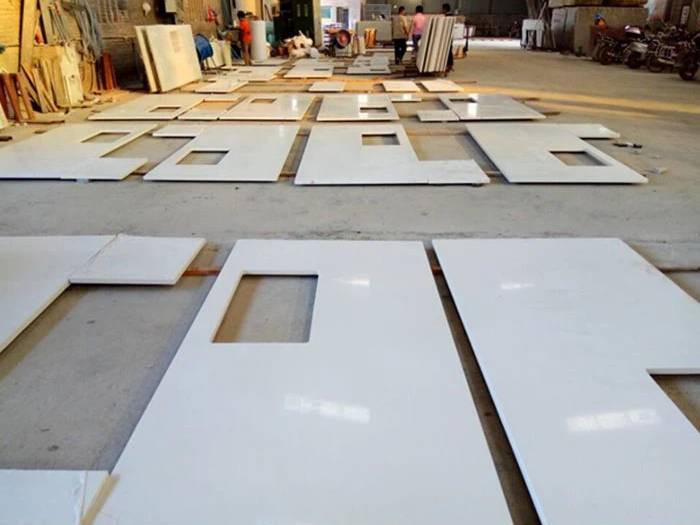
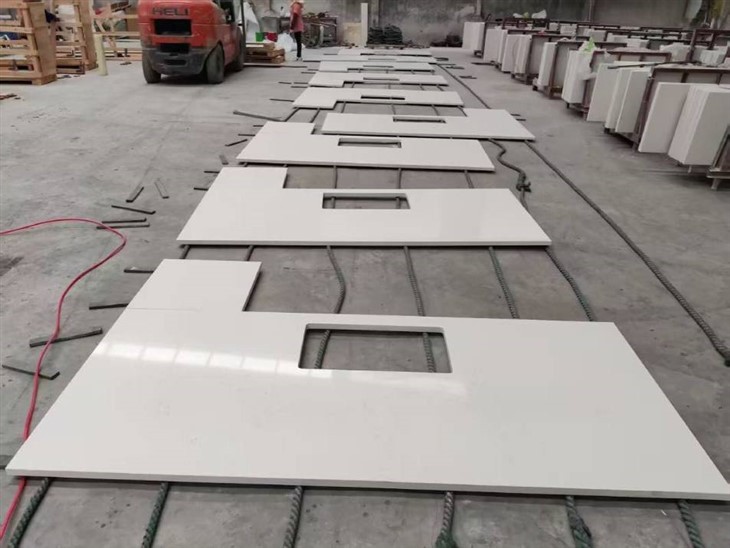
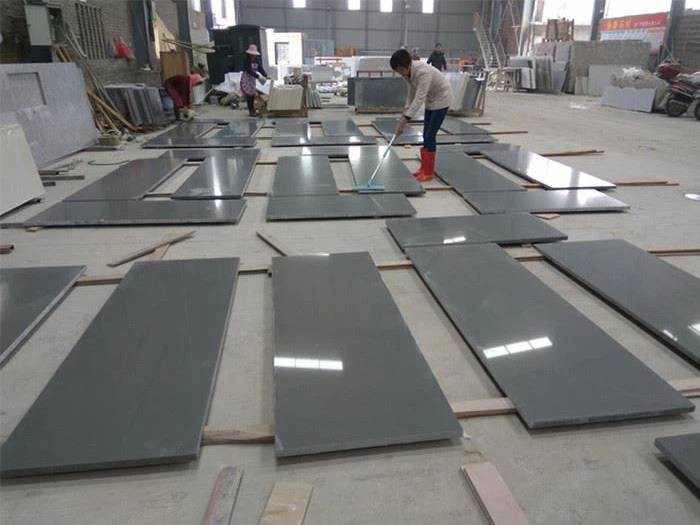
Budget Considerations: Think Total Cost, Not Unit Price
One of the most common mistakes in quartz countertop selection is focusing only on price per square meter.
In commercial projects, the real cost includes:
- Material cost
- Fabrication (cutting, edge finishing, sink cutouts)
- Packaging and shipping
- Installation efficiency
- Replacement and maintenance risk
A cheaper slab with poor consistency can lead to rework, delays, or customer complaints-costing far more than the initial savings.
Where costs can increase unexpectedly:
- Color variation between batches
- Inconsistent thickness causing installation issues
- Poor packaging leading to breakage
- Delayed delivery affecting project schedule
Project mindset:
Evaluate quartz as a system cost, not just a material cost.
Supplier Evaluation: The Real Deciding Factor
In commercial projects, the supplier matters more than the product itself. Even good material can become a problem if the supplier cannot deliver consistently.
What to check when evaluating a supplier:
1. Production Consistency
- Can they control color across batches?
- Do they have stable raw material sourcing?
2. Quality Control
- Do they inspect slabs before shipment?
- Can they provide inspection reports or photos?
3. Project Experience
- Have they handled hotel, apartment, or large commercial orders?
- Do they understand bulk production requirements?
4. Packaging & Logistics
- Are slabs properly packed for long-distance shipping?
- Do they have experience with export documentation?
5. Communication Efficiency
- Can they respond quickly to design changes?
- Do they provide clear drawings and confirmations?
For international buyers, working with a supplier that understands project timelines and export requirements is critical. This is where many procurement issues actually come from-not the material itself, but poor coordination.
Consistency Is the Priority in Commercial Quartz
In residential projects, variation might be acceptable. In commercial projects, it is not.
If you are supplying 200 apartments or a hotel chain, every countertop must look the same. That means:
- Same color tone
- Same surface finish
- Same thickness
- Same edge processing
This is why batch control and sample approval are essential before mass production.
Recommended approach:
- Lock a physical sample before production
- Confirm batch production plan
- Request pre-shipment inspection photos
Choosing quartz countertops for commercial projects is about control-control over quality, cost, and timelines.
The right decision comes down to four things:
- Clear project requirements
- Practical thickness and finish selection
- Full cost evaluation
- Reliable supplier capability
For developers, contractors, and distributors, a well-planned quartz countertop selection process reduces risk and ensures smoother project execution. In most cases, the success of a commercial quartz project is not determined by the material alone, but by how well the entire supply process is managed.