

Grain Structure Analysis: Selecting Granite for Romania Style Memorials
Jun 02, 2026
Leave a message
When sourcing raw blocks for memorial fabrication, the physical crystalline structure of the stone is the ultimate deciding factor for both production yield and aesthetic quality. In the context of intricate stonemasonry, fine-grained monument granite heavily outperforms coarse-grained alternatives. Petrologically, coarse-grained stones contain large, visible mineral crystals-primarily quartz, feldspar, and mica-which create distinct internal cleavage planes. These large crystal boundaries act as mechanical weak points. When subjected to the aggressive vibration and torque of high-speed CNC router bits or pneumatic chiseling, these weak points frequently result in spalling or "blowouts" along the edges. Conversely, a tightly packed microscopic crystal matrix allows the stone to hold a razor-sharp edge without fracturing. For wholesale importers, specifying the correct grain size before cutting begins is the most effective way to eliminate wasted material and rejected shipments at the factory level.
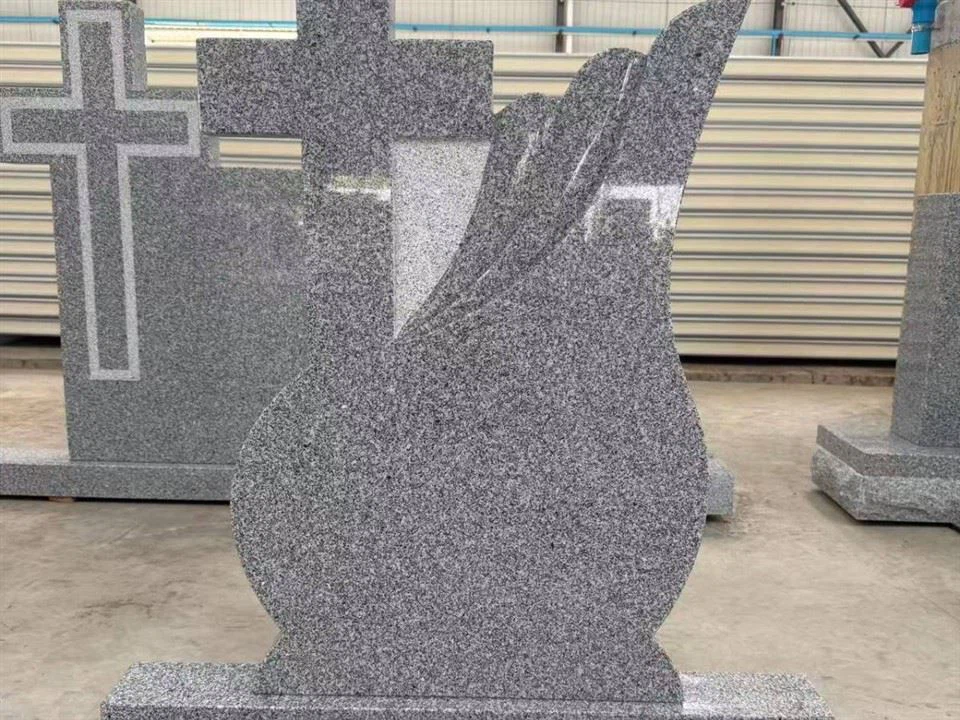
Why 3D Floral Reliefs and Wavy Edges Demand High-Density Cambodia Grey
The complex aesthetic requirements of Eastern European markets involve severe geometric challenges. Producing deep 3D floral reliefs and asymmetrical wavy edges requires a material with exceptional structural density. When a 5-axis CNC machine mills out the negative space around a delicate, millimeter-thin flower petal, a coarse stone will simply crumble under the rotational force. This structural limitation is why leading distributors rely on a specialized Cambodia Grey granite supplier for these specific architectural designs. Extracted directly from quarry operations in Kampong Speu, this specific material possesses a remarkably dense, interlocking quartz matrix that effortlessly supports aggressive mechanical profiling. This guarantees that every complex curve, sharp transition, and deep shadow is rendered flawlessly without structural failure, significantly reducing tool wear and ensuring zero deviation from the approved CAD blueprint.
Our products


The Direct Impact of Crystalline Structure on Micro-Porosity and Moss Resistance
Beyond the factory floor, the stone's crystalline structure dictates its long-term survival in harsh climates. Many Romania style memorials face brutal freeze-thaw cycles and damp environments typical of Eastern European winters. Stones with larger grain structures naturally possess higher micro-porosity, meaning their internal capillary networks absorb significantly more moisture from rain and humidity. This absorbed water not only causes catastrophic winter cracking when it freezes and expands, but it also creates an ideal, damp breeding ground for moss, lichen, and algae. Because fine-grained monument granite has an incredibly low moisture absorption rate, it naturally repels surface water and biological growth. This closed-surface characteristic drastically reduces maintenance costs for the end-user and protects the distributor from premature weathering complaints that can severely damage a brand's reputation.
Material Selection Advice for Distributors: Balancing Carving Detail and Raw Stone Costs
Procurement managers must constantly balance the raw block cost against the final retail value of the monument. While high-density stones may carry a slightly higher initial extraction cost, this investment is strictly mandatory for heavily carved Romania style memorials. Attempting to use a cheaper, highly porous stone for a complex wavy edge design will inevitably result in high breakage rates during fabrication, effectively destroying your overall profit margin through wasted labor, broken CNC tooling, and scrapped blocks. By partnering directly with an integrated Cambodia Grey granite supplier, distributors secure sequentially matched, high-density blocks straight from the source. This closed-loop supply chain ensures high fabrication yields, consistent color batching, and the ability to command premium retail pricing in highly competitive markets.