

From Quarry to Finished Slab: How Granite Is Processed
Mar 09, 2026
Leave a message
Granite is one of the most widely used natural stones in construction, memorials, and interior design. However, the journey from raw block to polished slab involves multiple technical stages and specialized equipment. Understanding this process helps buyers evaluate product quality, processing capability, and supplier reliability.
In today's global stone industry, granite blocks are sourced from different countries but are often processed in professional facilities. Many international buyers rely on a granite processing factory in China for precision cutting, finishing, and large-scale granite slab manufacturing.
Products Description
The process begins at the quarry, where large granite blocks are extracted from natural stone deposits. Granite quarries exist in many regions worldwide, including Brazil, India, Norway, South Africa, and several parts of Europe.
At the quarry, workers use diamond wire saws, drilling equipment, and controlled cutting techniques to separate massive stone blocks from the bedrock. These blocks typically weigh several tons and must be carefully handled to avoid cracks or internal damage.
After extraction, the raw blocks are inspected and categorized based on color consistency, grain pattern, and structural quality.
Important industry note:
While granite blocks originate from multiple countries, many are exported to specialized processing facilities-particularly in China-where large-scale manufacturing and finishing are performed.
Block Transportation to Processing Facilities
Once the blocks are prepared at the quarry, they are transported to processing plants. Because granite blocks are extremely heavy, shipping usually involves reinforced containers or bulk cargo transport.
China has become a major global hub for stone manufacturing because of its mature supply chain, skilled labor, and advanced machinery. International buyers often source raw materials globally but rely on a Chinese granite processing factory for consistent production quality and efficient logistics.
At the factory, blocks are unloaded, labeled, and scheduled for cutting according to production orders.
Block Cutting – Turning Stone Blocks into Slabs
The first major manufacturing stage is cutting the granite block into slabs.
Large industrial machines called gang saws or multi-wire saws slice the block into multiple slabs simultaneously. These machines use diamond-tipped blades or wires to cut through the dense stone with high precision.
Typical slab thickness includes:
- 2 cm slabs for interior applications
- 3 cm slabs for countertops and structural uses
- Custom thickness for architectural projects
Precision cutting ensures minimal material waste and consistent slab dimensions during granite slab manufacturing.
Surface Grinding and Calibration
After the initial cutting stage, slabs undergo grinding and calibration to create a uniform thickness and smooth surface.
Automated grinding lines use multiple abrasive heads to gradually refine the stone surface. This step removes saw marks and prepares the slab for final finishing.
Calibration is critical for projects requiring accurate installation, such as countertops, flooring panels, or wall cladding systems.
Our Products
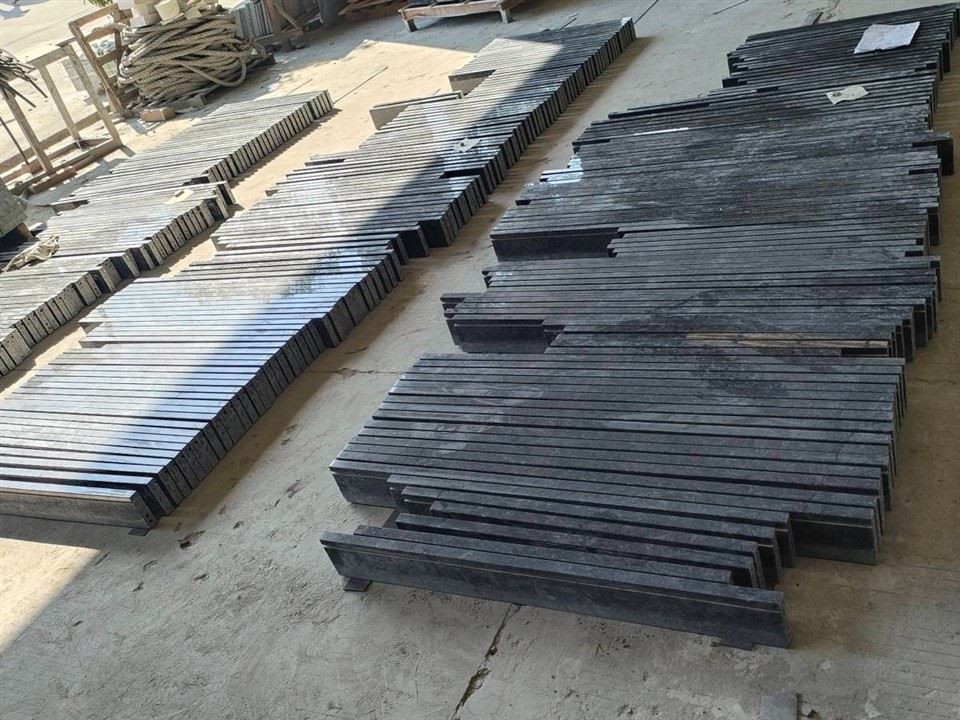
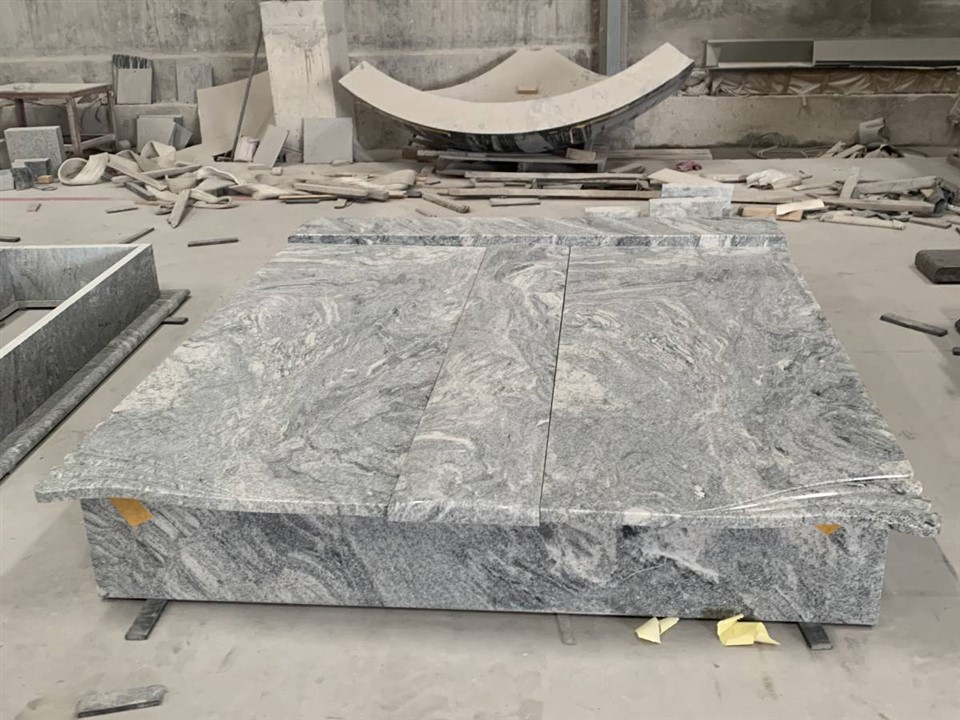
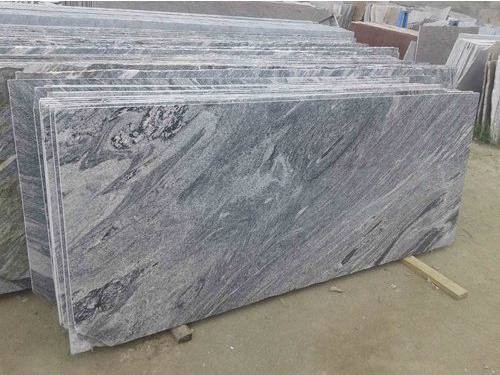
Polishing and Surface Finishing
Polishing is one of the most recognizable stages in granite processing. High-speed polishing machines use progressively finer abrasives to produce a glossy, reflective surface that highlights the natural mineral pattern of the stone.
In addition to polished finishes, factories may also produce:
- Honed finishes (matte surface)
- Flamed finishes (textured outdoor surface)
- Brushed finishes (soft textured appearance)
These finishing options allow granite slabs to be used in both interior and exterior architectural applications.
Quality Inspection and Color Sorting
After polishing, slabs are carefully inspected to ensure they meet quality standards.
Technicians check for:
- Surface cracks or defects
- Thickness consistency
- Color variation between slabs
- Polishing quality
For large projects, slabs are often sorted by color tone to maintain visual consistency across installations.
Quality control at this stage is particularly important for international buyers sourcing materials from a granite processing factory.
Packaging and Export
Once approved, finished slabs are packaged for shipment. Protective materials, reinforced wooden crates, and steel supports are used to prevent breakage during transportation.
Export-ready granite slabs are then shipped worldwide to fabricators, construction companies, distributors, and monument manufacturers.
Because many blocks originate from different quarries around the world, processing them in centralized manufacturing hubs allows buyers to access a wide range of granite colors and textures through a single supplier.
Why Many Buyers Choose Granite Processing in China
China plays a key role in global granite slab manufacturing because of several advantages:
- Large-scale stone processing infrastructure
- Advanced cutting and polishing machinery
- Experienced technicians and engineers
- Efficient export logistics
- Ability to process blocks from multiple international quarries
This combination allows buyers to source raw granite globally while benefiting from efficient and standardized manufacturing.
Granite processing is a complex multi-stage operation that transforms raw quarry blocks into high-quality finished slabs. From extraction and transportation to cutting, polishing, and inspection, each step affects the final product's durability and appearance.
While granite blocks originate from many countries, much of the world's finishing work takes place in specialized facilities. Working with a professional granite processing factory ensures reliable granite slab manufacturing, consistent quality, and efficient global supply.