

What is the origin of pure white quartz slabs?
Oct 08, 2025
Leave a message
Quartz is a mineral that has long fascinated humanity with its beauty and versatility. Among the various types of quartz, pure white quartz slabs stand out for their pristine appearance and suitability for a wide range of applications. As a supplier of Pure White Quartz Slabs, I am often asked about the origin of these exquisite materials. In this blog post, I will delve into the scientific and geological aspects of the origin of pure white quartz slabs, exploring the processes that shape them and the locations where they are sourced.
The Formation of Quartz
Quartz is one of the most abundant minerals on Earth, making up approximately 12% of the Earth's crust. It is a silicon dioxide mineral with the chemical formula SiO₂. The formation of quartz begins deep within the Earth's crust, where high temperatures and pressures cause silicon and oxygen atoms to combine. This process can occur in a variety of geological settings, including igneous, metamorphic, and sedimentary environments.
In igneous rocks, quartz forms as magma cools and solidifies. As the magma slowly cools, the silicon and oxygen atoms arrange themselves into a crystalline structure, forming quartz crystals. These crystals can vary in size and shape, depending on the cooling rate and the chemical composition of the magma. Some of the most beautiful quartz crystals are formed in pegmatites, which are coarse-grained igneous rocks that contain large crystals of quartz, feldspar, and mica.
Metamorphic rocks are formed when existing rocks are subjected to high temperatures and pressures, causing them to change their mineralogy and texture. Quartz can also form in metamorphic environments, as the original minerals in the rock are recrystallized under the influence of heat and pressure. For example, quartzite is a metamorphic rock that is formed from sandstone. During the metamorphic process, the sand grains in the sandstone are fused together by the pressure and heat, forming a hard, dense rock composed mainly of quartz.
Sedimentary rocks are formed from the accumulation and consolidation of sediment, such as sand, silt, and clay. Quartz is a common component of sedimentary rocks, as it is resistant to weathering and erosion. When sediment is deposited in a sedimentary basin, the quartz grains can be sorted and transported by water or wind, eventually forming layers of sandstone or other sedimentary rocks. Over time, these sedimentary rocks can be buried and subjected to pressure, causing them to become compacted and lithified.
The Origin of Pure White Quartz
Pure white quartz is a type of quartz that is characterized by its high purity and lack of impurities. The whiteness of the quartz is due to the absence of trace elements and minerals that can cause coloration. In nature, pure white quartz is relatively rare, as most quartz contains small amounts of impurities that give it a slight coloration, such as pink, yellow, or gray.
The origin of pure white quartz can be traced back to specific geological processes and locations. One of the main factors that contribute to the formation of pure white quartz is the purity of the source material. In some cases, pure white quartz is formed from the recrystallization of silica-rich fluids in a low-impurity environment. These fluids can be derived from the dissolution of silica-bearing minerals in the surrounding rock or from hydrothermal activity.
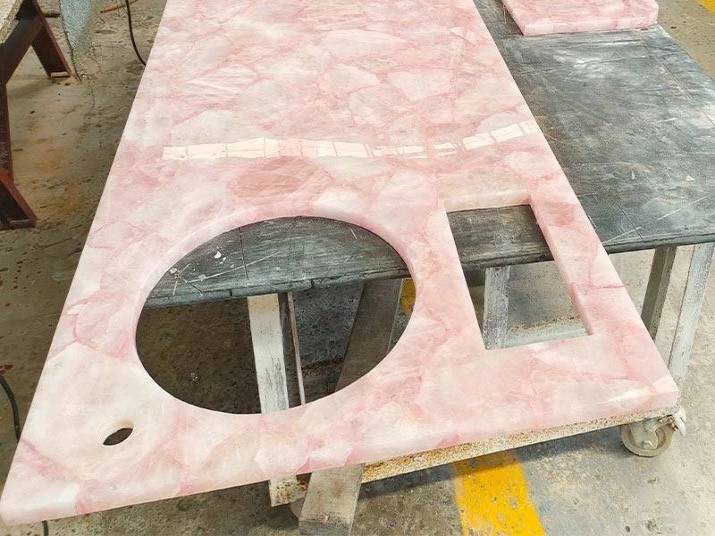
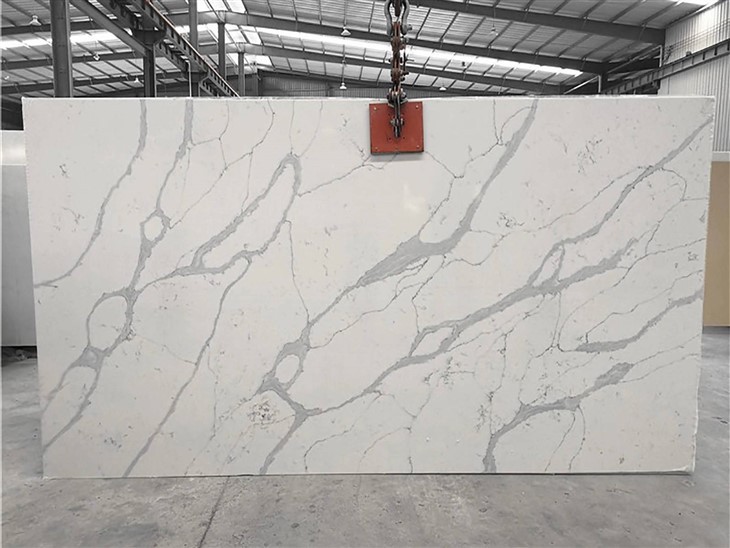
Another important factor is the geological environment in which the quartz forms. Pure white quartz is often found in areas with low levels of contamination and a stable geological history. For example, some of the world's best-known sources of pure white quartz are located in remote regions with minimal human activity and industrial pollution. These areas provide a clean and stable environment for the formation and preservation of pure white quartz.
Global Sources of Pure White Quartz Slabs
As a supplier of Pure White Quartz Slabs, I source my materials from some of the world's most reputable mines and quarries. These sources are carefully selected based on the quality, purity, and consistency of the quartz. Here are some of the main global sources of pure white quartz slabs:
- Brazil: Brazil is one of the largest producers of quartz in the world, and it is also a major source of pure white quartz slabs. The country's vast mineral resources and diverse geological formations make it an ideal location for the extraction of high-quality quartz. Brazilian quartz is known for its purity, whiteness, and durability, making it a popular choice for a variety of applications, including countertops, flooring, and wall cladding.
- India: India is another important source of pure white quartz slabs. The country has a long history of mining and processing quartz, and it is home to some of the world's largest quartz mines. Indian quartz is known for its beautiful white color and fine grain structure, which makes it suitable for high-end applications. Many of the quartz slabs produced in India are exported to countries around the world, including the United States, Europe, and Asia.
- China: China is the world's largest producer of quartz, and it also has significant reserves of pure white quartz. The country's advanced mining and processing technologies allow for the efficient extraction and production of high-quality quartz slabs. Chinese quartz slabs are known for their competitive prices and wide range of colors and patterns, making them a popular choice for both domestic and international markets.
- Madagascar: Madagascar is a relatively new player in the global quartz market, but it has quickly gained a reputation for producing high-quality pure white quartz slabs. The country's unique geological formations and rich mineral resources make it an ideal location for the extraction of quartz. Malagasy quartz is known for its exceptional purity and whiteness, as well as its unique patterns and textures.
Applications of Pure White Quartz Slabs
Pure white quartz slabs are highly versatile materials that can be used in a variety of applications. Their beautiful appearance, durability, and low maintenance requirements make them a popular choice for both residential and commercial projects. Here are some of the main applications of pure white quartz slabs:
- Countertops: One of the most common applications of pure white quartz slabs is in kitchen and bathroom countertops. The smooth, non-porous surface of quartz makes it resistant to stains, scratches, and bacteria, making it an ideal choice for food preparation areas. Pure white quartz countertops can add a touch of elegance and sophistication to any kitchen or bathroom, and they are available in a variety of sizes and shapes to fit any design.
- Flooring: Pure white quartz slabs can also be used for flooring in both residential and commercial settings. The durability and slip-resistant properties of quartz make it a safe and practical choice for high-traffic areas. Quartz flooring can create a bright and spacious look in any room, and it is available in a variety of finishes, including polished, honed, and textured.
- Wall Cladding: Quartz slabs can be used to create stunning wall cladding in both interior and exterior applications. The smooth, uniform surface of the slabs can add a modern and sophisticated look to any space, and they are available in a variety of colors and patterns to match any design scheme. Quartz wall cladding is also resistant to weathering and fading, making it a durable and long-lasting choice for exterior applications.
- Decorative Features: Pure white quartz slabs can be used to create a variety of decorative features, such as fireplace surrounds, backsplashes, and shower walls. The beautiful appearance of quartz can add a touch of luxury and elegance to any room, and it can be customized to fit any design concept.
Why Choose Our Pure White Quartz Slabs
As a leading supplier of Pure White Quartz Slabs, we are committed to providing our customers with the highest quality products and services. Here are some of the reasons why you should choose our pure white quartz slabs:
- High Quality: Our pure white quartz slabs are sourced from the world's best mines and quarries, ensuring the highest level of quality and purity. We use advanced manufacturing processes and strict quality control measures to ensure that our slabs meet the highest industry standards.
- Wide Selection: We offer a wide selection of pure white quartz slabs in different sizes, thicknesses, and finishes to meet the diverse needs of our customers. Whether you are looking for a small countertop for your kitchen or a large slab for a commercial project, we have the perfect solution for you.
- Competitive Prices: We understand the importance of providing our customers with competitive prices without compromising on quality. We work closely with our suppliers to negotiate the best prices and pass on the savings to our customers.
- Excellent Customer Service: Our team of experienced professionals is dedicated to providing our customers with excellent customer service. We are available to answer your questions, provide you with samples, and assist you with the selection and installation of your pure white quartz slabs.
Contact Us for Your Pure White Quartz Slab Needs
If you are interested in purchasing pure white quartz slabs for your next project, we would be happy to hear from you. Our team of experts can provide you with more information about our products, answer your questions, and assist you with the selection and installation process. To learn more about our Quartz Countertops Slabs, Alabaster White Slab Quartz, and Pink Quartz Slab, please contact us today. We look forward to working with you to create the perfect space for your home or business.
References
- Deer, W. A., Howie, R. A., & Zussman, J. (1992). Rock-forming minerals: Volume 4A, Framework silicates: Feldspars. Longman Scientific & Technical.
- Klein, C., & Hurlbut, C. S. (1993). Manual of mineralogy (21st ed.). Wiley.
- Skinner, B. J., & Porter, S. C. (2000). The dynamic Earth: An introduction to physical geology. Wiley.