

What are the factors affecting the price of Chinese Granite?
Jul 30, 2025
Leave a message
Hey there! As a Chinese granite supplier, I've been in the business for quite a while, and I've seen all sorts of factors influencing the price of Chinese granite. So, I thought I'd share some insights with you on what makes the price of this beautiful natural stone go up or down.
1. Quality and Appearance
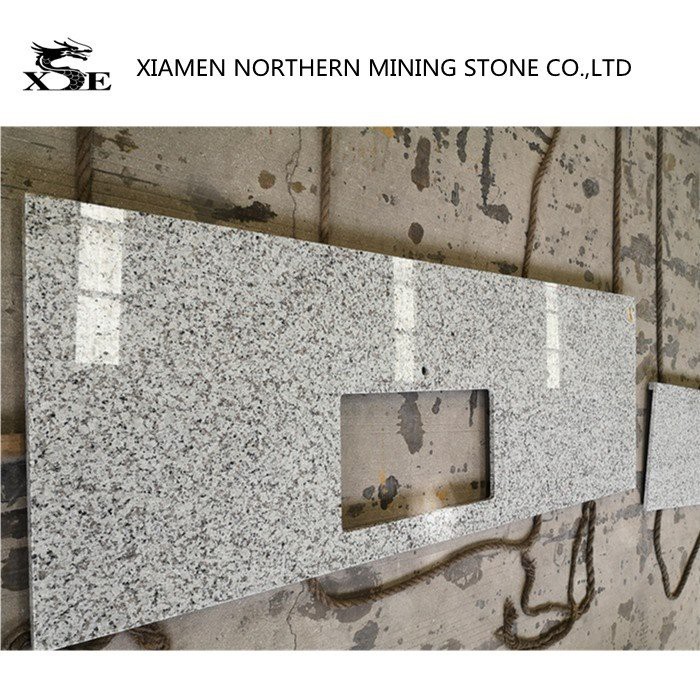
One of the most obvious factors is the quality and appearance of the granite. High - quality Chinese granite has a consistent color, fewer cracks, and a fine - grained texture. For instance, the Bala White Granite Countertops Bala White Granite Countertops are known for their elegant white color with subtle veining. This type of granite is highly sought after for kitchen countertops because it looks luxurious and can withstand daily wear and tear.
Granite with unique patterns or rare colors will also command a higher price. If you're looking for something really special, you might be willing to pay more for a slab that has a one - of - a - kind appearance. On the other hand, lower - quality granite with visible flaws, uneven color, or large cracks will be cheaper. These are often used in areas where appearance isn't the top priority, like some outdoor projects.
2. Origin and Quarry Location
The origin of the granite matters a lot. Different regions in China have different geological conditions, which result in granites with different characteristics. Some quarries are known for producing high - grade granite, while others may yield lower - quality stones.
Quarries that are located in remote areas can also affect the price. If it's difficult to access the quarry, transportation costs will be higher. This includes the cost of getting the granite from the quarry to the processing facility and then to the end - user. For example, if a quarry is in a mountainous region with poor road infrastructure, the suppliers have to spend more on fuel, vehicle maintenance, and labor to move the granite.
3. Processing and Finishing
How the granite is processed and finished also plays a big role in its price. Cutting the granite into slabs requires precision and specialized equipment. If the cutting is done poorly, there may be wastage, which increases the overall cost. High - end processing facilities use advanced technology to ensure accurate cuts and minimize waste.
Finishing is another important aspect. There are different finishes available for granite, such as polished, honed, and flamed. A polished finish gives the granite a shiny, reflective surface, which is very popular for countertops. However, achieving a perfect polished finish requires more time and effort, so it's more expensive. A honed finish, on the other hand, has a matte look and is less labor - intensive, so it's usually cheaper. The flamed finish gives the granite a rough, textured surface and is often used for outdoor applications. Each finish has its own production process and cost associated with it.
4. Market Demand and Supply
Just like any other product, the law of supply and demand affects the price of Chinese granite. When there is high demand for granite, especially for popular colors and patterns, the price will go up. For example, if there's a trend of using granite for kitchen countertops in a particular area, the demand for granite will increase, and suppliers may raise the price.
Conversely, if the supply of a certain type of granite is abundant, the price will be more competitive. If a new quarry opens up and starts producing a large amount of a particular granite, the market will be flooded with it, and the price is likely to drop. Market demand can also be influenced by factors such as economic conditions, construction trends, and consumer preferences.
5. Thickness and Size
The thickness and size of the granite slabs can impact the price. Thicker slabs are generally more expensive because they require more raw material and are more difficult to handle and process. For countertops, thicker slabs are often preferred as they are more durable and give a more substantial look.
Larger slabs are also costlier. If you need a large, single - piece slab for a big kitchen island or a large - scale project, you'll have to pay more. This is because it's more challenging to find and extract large, unblemished slabs from the quarry. There's also a higher risk of damage during transportation and installation.

6. Transportation and Logistics
Transportation costs are a significant factor in the price of Chinese granite. If you're located far away from the supplier, the cost of shipping the granite to your location will be added to the price. International shipping, in particular, can be very expensive. It involves not only the cost of the shipping vessel or truck but also customs duties, insurance, and handling fees.
Logistics also includes the time it takes to get the granite to you. If you need the granite urgently, you may have to pay extra for expedited shipping. On the other hand, if you're willing to wait for a slower shipping option, you can save some money.
7. Market Competition
The level of competition in the market can affect the price. In areas where there are many Chinese granite suppliers, they will compete with each other to attract customers. This often leads to price wars, where suppliers lower their prices to gain a larger market share.
However, in some cases, suppliers may also form alliances or monopolies, which can drive the price up. If a few large suppliers control the majority of the market, they can set higher prices. It's important for buyers to do their research and compare prices from different suppliers to get the best deal.
8. Global Economic Conditions
Global economic conditions can have an indirect impact on the price of Chinese granite. During an economic recession, the construction industry may slow down, which means less demand for granite. As a result, suppliers may lower their prices to stimulate sales.
On the other hand, during an economic boom, there is usually more construction activity, and the demand for granite increases. This can lead to price hikes. Exchange rates also play a role, especially for international buyers. If the Chinese currency strengthens against the buyer's currency, the granite will become more expensive for them.
Why Choose Our Chinese Granite?
As a supplier, we take pride in offering high - quality Chinese granite at competitive prices. We work closely with the quarries to ensure that we source the best - grade granite. Our state - of - the - art processing facilities allow us to produce granite slabs with precise cuts and beautiful finishes.
Whether you're looking for Granite Countertop Material for your kitchen or Natural Stone Granite Flooring for your living room, we have a wide range of options to choose from. We understand that price is an important factor for our customers, and we do our best to keep our prices reasonable by optimizing our supply chain and reducing unnecessary costs.
If you're interested in purchasing Chinese granite, we'd love to have a chat with you. Contact us to discuss your project requirements, and we'll work with you to find the perfect granite solution at a price that fits your budget.
References
- Geological Society of China. (Year). Studies on Chinese Granite Formations.
- Construction Industry Reports. (Year). Market Trends in Chinese Granite.
- International Stone Association. (Year). Guidelines for Granite Pricing and Supply.