

Is Quartz Stone Natural?
Feb 14, 2025
Leave a message
Quartz can be both natural (a mineral formed in nature) and engineered (a human-made composite). Here's a detailed breakdown to clarify the distinction:
1. Natural Quartz
Formation: Natural quartz is a mineral composed of silicon dioxide (SiO₂). It forms in igneous, metamorphic, and sedimentary rocks over millions of years.
Appearance: Found as clear, white, or colored crystals (e.g., amethyst, citrine, blue quartz). Natural quartz often has inclusions, fractures, or irregularities.
Uses:
Raw crystals for collectors.
Cut and polished into gemstones (e.g., jewelry, carvings).
Crushed for industrial purposes (e.g., electronics, abrasives).
2. Engineered Quartz (Human-Made)
Composition: Made by combining ~90–95% crushed natural quartz with 5–10% resins, polymers, and pigments.
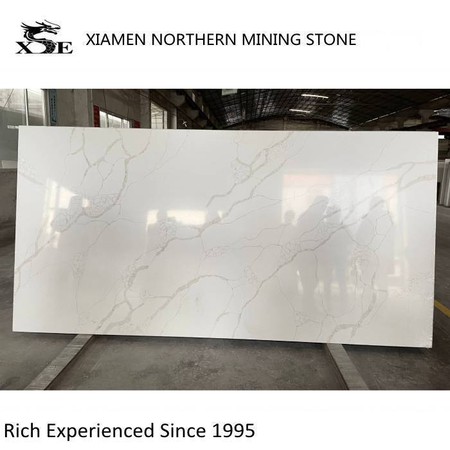
Appearance: Uniform color and pattern (no natural inclusions). Commonly used for countertops and tiles.
Uses:
Countertops (marketed as "quartz surfaces" by brands like Caesarstone or Silestone).
Flooring and wall panels.
Key Differences
| Feature | Natural Quartz | Engineered Quartz |
|---|---|---|
| Origin | Mined from the earth. | Factory-produced composite. |
| Structure | Irregular, with inclusions. | Uniform, non-porous surface. |
| Durability | Hard (7 on Mohs scale) but can chip or fracture. | Highly scratch/stain-resistant due to resins. |
| Cost | Varies (raw stones are affordable; gem-grade is expensive). | Typically expensive due to manufacturing. |
Why the Confusion?
Marketing Terms: Engineered quartz is often called "quartz" without clarifying it's a composite.
Visual Similarity: Both can look alike (e.g., white engineered quartz vs. natural milky quartz).
How to Tell Them Apart
Visual Inspection:
Natural quartz has imperfections (veins, cloudiness).
Engineered quartz has repetitive patterns and a plastic-like gloss.
Weight: Engineered quartz is lighter due to resin content.
Certifications: Ask for a material composition report (engineered quartz lists resin percentages).
Price: Natural quartz slabs are rare; most countertops labeled "quartz" are engineered.
Sustainability Considerations
Natural Quartz: A finite resource; mining impacts ecosystems.
Engineered Quartz: Uses recycled materials but contains non-biodegradable resins.
Final Answer
Natural quartz exists as a mineral formed by geological processes.
Engineered quartz is a manufactured product blending natural quartz with synthetic materials.
Always ask sellers for clarity: "Is this 100% natural quartz or an engineered composite?"
For ethically sourced natural quartz or certified engineered slabs, contact Stone Epic Stone for transparency and quality assurance.