

Heat Resistance in Quartz Countertops: What Buyers Should Know
Dec 22, 2025
Leave a message
Quartz countertops are widely recognized for their durability, low maintenance, and consistent appearance. However, when buyers evaluate quartz for kitchens-especially commercial or high-traffic environments-heat resistance is often one of the most misunderstood performance factors. Many problems associated with quartz are not caused by material defects, but by unrealistic expectations or improper use.
This article explains the real heat resistance limits of quartz countertops, how they compare with natural stone, and what buyers should consider when specifying quartz for residential or commercial projects.
Understanding Heat Resistance in Quartz Countertops
Quartz slabs are engineered materials composed of natural quartz crystals bound together with polymer resins. While quartz itself is highly heat-resistant, the resin component has a lower tolerance to extreme temperatures.
In practical terms, quartz countertops can withstand normal kitchen heat but are not designed for direct, prolonged contact with high-temperature cookware.
What Is the Actual Heat Limit of Quartz?
Most quartz surfaces can tolerate temperatures up to approximately 150–180°C (300–350°F) without damage. This range easily covers everyday kitchen activities such as:
- Hot plates
- Warm cookware
- Boiling water spills
- Steam exposure
However, placing a pan or pot directly from a stove or oven-often exceeding 200°C (400°F)-can cause:
- Discoloration
- Resin softening
- Surface dulling
- Permanent burn marks
These issues are usually localized and cosmetic but difficult to repair.
Quartz vs Natural Stone: Heat Performance Comparison
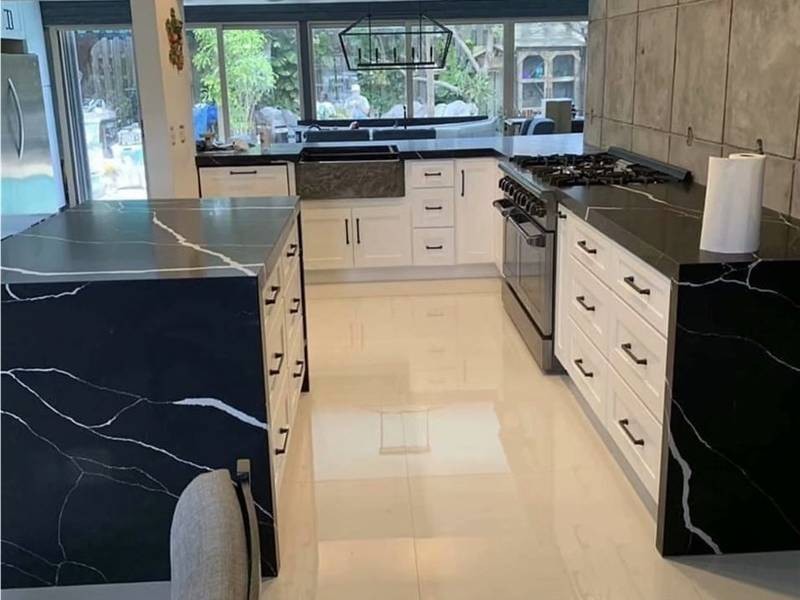
Quartz Countertops
- Moderate heat resistance
- Resin-sensitive at extreme temperatures
- Excellent performance when used correctly
- Best suited for controlled kitchen environments
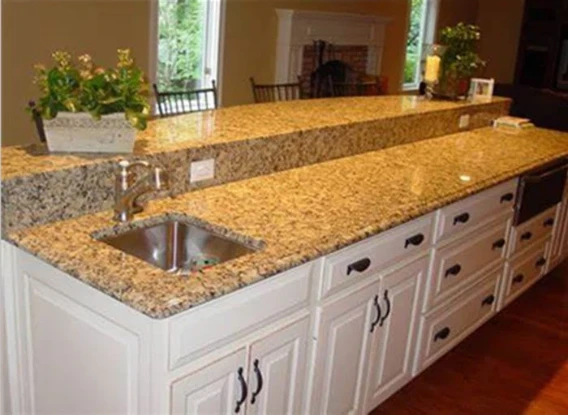
Granite
- Higher heat tolerance
- Less affected by hot cookware
- Still vulnerable to thermal shock in rare cases
Marble
- Moderate heat resistance
- More sensitive to etching and surface damage
- Heat marks may combine with chemical damage
While granite performs better under high heat, quartz offers greater consistency, stain resistance, and lower maintenance-making it a more balanced choice for most projects.

Correct Usage: How to Prevent Heat Damage
Heat-related issues are almost entirely preventable with proper usage guidelines:
- Always use trivets or heat pads under hot cookware
- Avoid placing hot pans directly from ovens or grills onto quartz surfaces
- Do not use quartz as a surface for portable grills or hot plates
- Allow cookware to cool briefly before contact
These practices are standard in professional kitchens and should be communicated clearly to end users.
Why Quartz Still Works Well in High-Traffic Kitchens
Despite heat limitations, quartz remains one of the most durable quartz surface options available for kitchens due to:
- High resistance to stains and moisture
- Non-porous structure supporting hygiene standards
- Strong resistance to scratching and daily wear
- Consistent appearance across large installations
In restaurants, hotels, and residential developments, quartz performs reliably when combined with basic heat-protection habits.
Project Procurement Advice for Buyers
When sourcing quartz countertops for projects, buyers should:
- Select quartz from reputable manufacturers using high-quality resin systems
- Confirm technical specifications and warranty coverage
- Communicate proper usage guidelines to installers and end users
- Avoid positioning quartz directly adjacent to open flames or commercial grills
For heavy-duty cooking zones, some projects combine quartz with stainless steel or granite inserts near heat sources.
Common Misconceptions About Quartz Heat Resistance
- "Quartz is heat-proof" - False. It is heat-resistant, not heat-proof.
- "All damage is manufacturing-related" - Incorrect. Most heat damage results from misuse.
- "Quartz is unsuitable for kitchens" - Untrue. Millions of kitchens use quartz successfully with basic care.
Understanding these distinctions helps buyers set realistic expectations.
Quartz countertops offer a durable, hygienic, and visually consistent surface for modern kitchens, but heat resistance has clear limits. By understanding these boundaries and following correct usage practices, buyers can confidently specify quartz for both residential and commercial projects. When paired with proper design planning and end-user education, quartz remains one of the most reliable countertop materials on the market.