

Granite vs. Marble for Tombstones: Practical Differences
Mar 04, 2026
Leave a message
When selecting materials for tombstones, appearance alone is never enough. Durability, climate resistance, and long-term performance are critical factors that directly affect maintenance costs and memorial longevity. Among all options, granite and marble remain the two most commonly used materials. While both have historical significance, their practical differences become clear once exposed to real-world conditions.
This article compares granite tombstones and marble tombstones from a practical perspective, helping buyers make informed decisions based on climate, lifespan expectations, and cemetery standards.
Durability: Structural Strength and Surface Stability
Granite is widely recognized for its superior hardness and density. Its tightly bonded crystalline structure makes it highly resistant to cracking, abrasion, and surface wear. This durability allows granite tombstones to maintain structural integrity even after decades of exposure.
Marble, by comparison, is a metamorphic stone with a softer composition. While it offers a smooth surface and elegant appearance, it is more prone to surface erosion, edge wear, and mechanical damage over time. In areas with heavy rainfall or air pollution, marble inscriptions may gradually lose sharpness.
Practical takeaway:
For projects prioritizing long-term durability and minimal surface degradation, granite is the more reliable choice.
Climate Adaptability: Performance in Different Environments
Climate plays a decisive role in tombstone material selection.
Granite performs exceptionally well across a wide range of climates. Its low water absorption rate makes it resistant to freeze–thaw cycles in cold regions, while its thermal stability helps it withstand extreme heat without surface cracking. This makes granite suitable for both temperate and harsh environments.
Marble is more sensitive to environmental stress. In cold climates, moisture penetration followed by freezing can lead to micro-fractures. In humid or acidic environments, marble surfaces may chemically react with rainwater, accelerating erosion and discoloration.
Practical takeaway:
Granite adapts better to cold, wet, and variable climates, while marble is best suited for mild, dry environments with controlled conditions.

Service Life: Long-Term Appearance and Maintenance
One of the most important considerations for memorial products is how they age.
Granite tombstones typically retain legibility, polish, and color contrast for several decades with minimal maintenance. Engraved text remains sharp, and surface finishes resist fading and biological growth.
Marble tombstones often require periodic cleaning and restoration to preserve inscriptions and surface clarity. Over time, lettering may soften, and surfaces may develop stains or uneven textures due to weathering.
Practical takeaway:
Granite offers a significantly longer service life with lower maintenance requirements, making it more cost-effective over time.
Aesthetic Considerations and Engraving Results
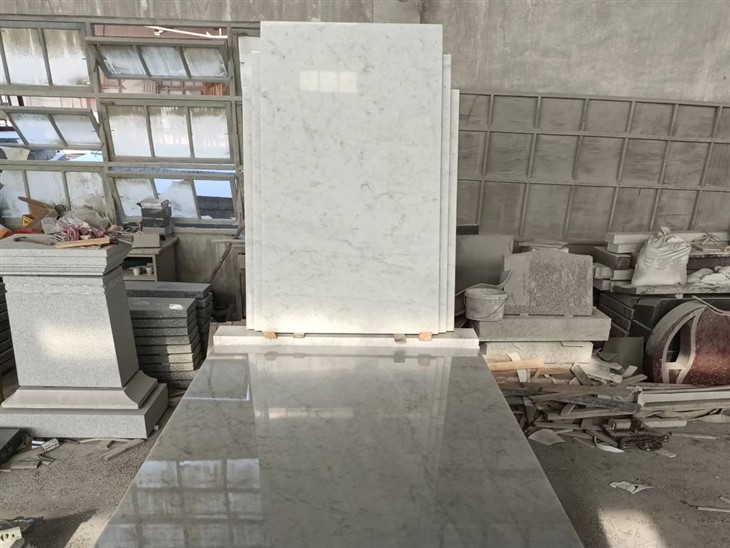
Marble has traditionally been favored for its classic white or light-toned appearance, which conveys a timeless and solemn aesthetic. It is easier to carve by hand, making it suitable for traditional sculpted designs.
Granite offers a broader range of colors and finishes, from polished black to textured gray and red tones. Modern engraving techniques allow granite to achieve highly detailed inscriptions, portraits, and decorative elements with excellent contrast and precision.
Practical takeaway:
Marble suits traditional designs and short-term aesthetic priorities, while granite supports both modern and classic memorial styles with long-lasting clarity.
Cost Efficiency Over Time
While marble tombstones may appear less expensive at initial purchase, long-term costs can be higher due to maintenance, restoration, or replacement.
Granite's higher initial cost is often offset by its longevity, reduced upkeep, and compliance with stricter cemetery durability standards.
Practical takeaway:
For long-term memorial projects and regulated cemeteries, granite provides better value across the full lifecycle of the tombstone.
Both granite and marble have a place in tombstone manufacturing, but their practical differences are substantial. Granite excels in durability, climate adaptability, and lifespan, making it the preferred material for long-lasting memorials. Marble, while visually elegant, is better suited for controlled environments or projects where traditional aesthetics outweigh long-term durability concerns.
For buyers, contractors, and memorial planners, understanding these material differences ensures better project outcomes, reduced maintenance risk, and greater satisfaction over time.