

Testing Freeze-Thaw Resistance in Thick Granite Ledger Slabs
May 12, 2026
Leave a message
In Eastern European cemetery construction, the foundation and ledger slab system form the structural and load-bearing core of the entire monument. For transnational stone importers in regions like Romania, the primary criterion for sourcing foundation stone is often not aesthetics, but the material's survivability in extreme climates. Today, the engineering team at Stone Epic provides a deep dive into the physical logic of freeze-thaw resistance in stone, and how we ensure the safety of volume orders through meticulous material selection and fabrication processes.
The Destructive Impact of Romanian Winters on Ledger Slab Porosity
In natural environments, horizontally placed stone suffers far greater environmental erosion than upright stelas. For expansive, flat-laid thick granite ledger slabs, the greatest engineering threat is not static load, but physical destruction caused by water penetration.
When autumn rains or early winter snowmelt seeps into the microscopic pores of the stone, and temperatures plummet below freezing at night, the trapped water freezes and expands in volume by approximately 9%. This internal expansion generates immense shear stress between the stone's crystals. After dozens of freeze-thaw cycles over a long winter, inferior stone with high porosity will irreversibly suffer from surface spalling and even deep, penetrating fractures. Therefore, procuring thick granite ledger slabs capable of fundamentally resisting this climatic stress is a strict quality baseline for every European importer.
Analyzing the High Mineral Density of Cambodia Grey
To solve the problem of freeze-thaw damage, we must first examine the physical crystalline properties of the raw block. Not all dark grey stones are suitable for the harsh outdoor environments of Eastern Europe. In our extreme testing and actual commercial engineering applications, Cambodia Grey has demonstrated outstanding weatherability, making it widely recognized as the premier freeze-thaw resistance granite on the market today.
This is primarily due to the dense, fine-grained mineral structure of Cambodia Grey. Unlike many loose stone varieties with high water absorption rates, the internal crystals of Cambodia Grey are tightly packed, resulting in exceptionally low natural micro-porosity. This inherent geological high-density advantage fundamentally blocks the capillary pathways for water penetration, making it the ideal base material for manufacturing high-volume freeze-thaw resistance granite monument components.
Our product

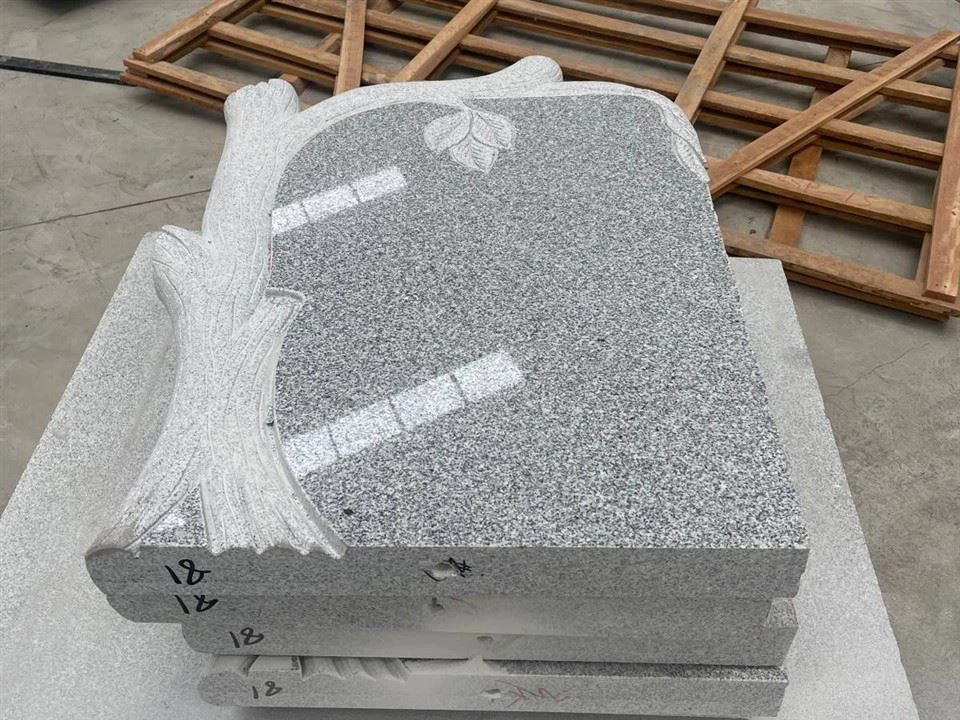
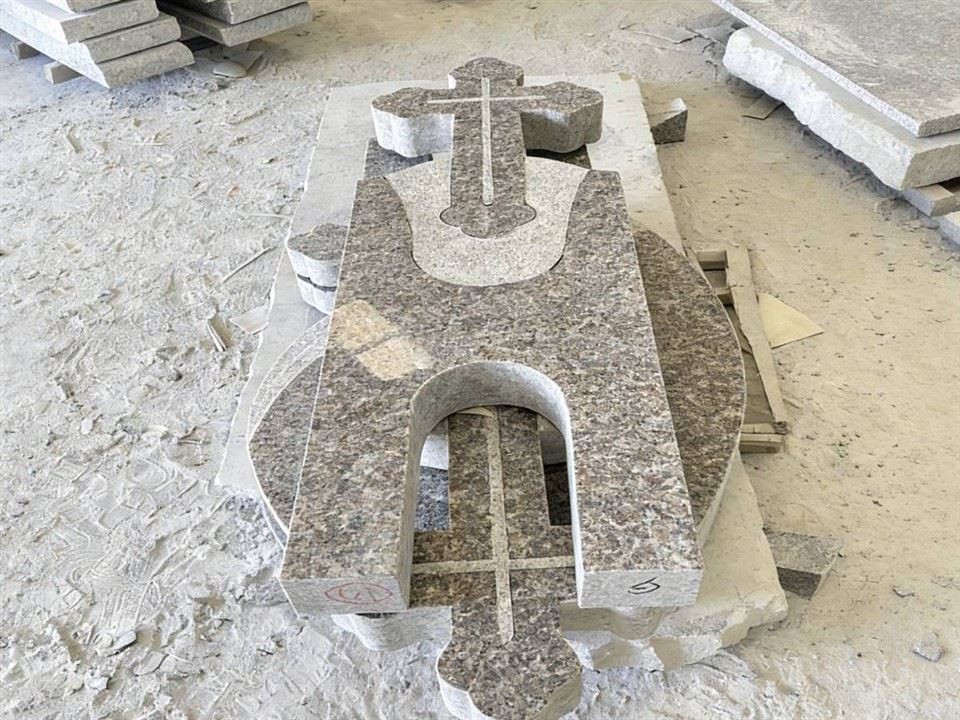
How True Mechanical Polish Closes Surface Micro-Pores to Prevent Moisture Ingress
Beyond the density of the raw stone itself, the surface treatment applied before shipping is the first and most critical physical barrier against water penetration. Many low-end fabrication plants in the industry habitually use chemical waxing to mask surface flaws in inferior stone or to artificially boost gloss. This practice is fatal in freezing outdoor environments-the chemical wax layer quickly washes away under rain and snow, completely exposing the stone's microscopic pores to the ice.
Stone Epic's production standards strictly prohibit any form of chemical masking. We mandate a true mechanical polish for all ledger slab surfaces and edges. Through high-pressure grinding using massive continuous automated polishing machines and multiple stages of resin-bond diamond abrasives, the extreme heat generated by physical friction effectively "irons out and closes" the microscopic gaps between the surface crystals. This purely physical high-gloss finish, which registers above 90 degrees on a gloss meter, not only yields a deep color but also acts as a natural waterproof shield, completely locking moisture out.
Shielding Romanian Importers from Winter-Cracking Warranty Claims
Monuments are heavy-duty commemorative structures expected to stand for decades. If a distributor procures inferior stone that fails to meet physical and chemical standards, and the heavy foundation slabs suffer massive cracking after the first winter, you will face not only the wrath of the end consumer but also exorbitant costs for on-site mechanical removal and transnational replacement shipping.
As a source OEM factory deeply rooted in the Eastern European market-effectively your most reliable Romanian monument factory-our core value lies in cutting off these risks upfront through engineering. By locking in high-density Cambodia Grey blocks and pairing them with strict, purely physical fabrication protocols, we ensure that every set of components delivered can withstand the harshest winters. Choosing a professional Romanian monument factory is not just about buying stone; it's about building "maintenance-free" brand trust in your local market and completely avoiding fatal warranty claims caused by material failure.