

What is the porosity of Grey Granite Tiles?
Dec 01, 2025
Leave a message
As a seasoned supplier of Grey Granite Tiles, I've always been fascinated by the various properties that make these tiles a popular choice in construction and interior design. One of the most crucial aspects that often goes unnoticed but significantly impacts the performance and durability of grey granite tiles is their porosity. In this blog, I'll delve into what porosity means for grey granite tiles, its implications, and how it can influence your decision when choosing the right tiles for your project.
Understanding Porosity
Porosity refers to the measure of void spaces or pores within a material. In the context of grey granite tiles, these pores are microscopic openings that can absorb liquids and gases. The porosity of a material is typically expressed as a percentage, representing the volume of pores relative to the total volume of the material.
Granite is an igneous rock formed from the slow crystallization of magma beneath the Earth's surface. During this process, various minerals such as quartz, feldspar, and mica are fused together, creating a hard and durable material. However, despite its hardness, granite still has a certain degree of porosity. The porosity of grey granite tiles can vary depending on several factors, including the mineral composition, the cooling rate of the magma, and the presence of any fractures or cracks in the rock.
Factors Affecting the Porosity of Grey Granite Tiles
Mineral Composition
The mineral composition of grey granite plays a significant role in determining its porosity. Quartz, one of the primary minerals in granite, is relatively non - porous. Tiles with a higher quartz content tend to have lower porosity. On the other hand, feldspar and mica can have a more variable porosity, and their presence in different proportions can affect the overall porosity of the tile. For example, if a grey granite tile has a higher proportion of feldspar, it may have slightly higher porosity compared to a tile with a higher quartz content.
Cooling Rate
The rate at which the magma cools during the formation of granite also impacts its porosity. Slow cooling allows for larger mineral crystals to form, which can result in a more compact and less porous structure. Conversely, rapid cooling can lead to the formation of smaller crystals and more void spaces, increasing the porosity of the granite.
Fractures and Cracks
The presence of fractures and cracks in grey granite tiles can significantly increase their effective porosity. These macroscopic openings provide pathways for liquids and gases to penetrate the tile more easily. Even a small crack can allow water to seep into the tile, potentially leading to staining, discoloration, or damage over time.
Measuring the Porosity of Grey Granite Tiles
There are several methods to measure the porosity of grey granite tiles. One common method is the water absorption test. In this test, a sample of the tile is first dried in an oven to remove any moisture. The dry weight of the sample is then measured. The sample is then immersed in water for a specified period, usually 24 hours. After the immersion, the excess water on the surface of the tile is removed, and the wet weight is measured. The difference in weight between the wet and dry samples is used to calculate the water absorption percentage, which is an indication of the tile's porosity.
Another method is mercury intrusion porosimetry. This technique involves forcing mercury into the pores of the tile under high pressure. By measuring the amount of mercury that enters the pores at different pressures, the size distribution and total volume of the pores can be determined. However, this method is more complex and expensive than the water absorption test and is typically used in research or quality control laboratories.
Implications of Porosity in Grey Granite Tiles
Stain Resistance
Tiles with lower porosity are generally more stain - resistant. Since there are fewer pores for liquids to penetrate, spills are less likely to be absorbed into the tile. For example, in a kitchen where spills of oil, wine, or acidic substances are common, low - porosity grey granite tiles are a better choice. They can be easily cleaned without the risk of permanent staining. On the other hand, high - porosity tiles may require more frequent sealing to prevent staining.
Durability
Porosity can also affect the durability of grey granite tiles. Water absorption can cause the tile to expand and contract with changes in temperature, which can lead to cracking or spalling over time. In areas with freeze - thaw cycles, such as outdoor patios or walkways, low - porosity tiles are essential to prevent damage from water freezing inside the pores.
Maintenance
High - porosity tiles may require more maintenance. They need to be sealed regularly to protect them from stains and moisture. Sealing creates a protective barrier on the surface of the tile, reducing the amount of liquid that can penetrate the pores. Low - porosity tiles, however, may require less frequent sealing, making them a more convenient option for busy homeowners or commercial spaces.
Choosing the Right Grey Granite Tiles Based on Porosity
When selecting grey granite tiles for your project, it's important to consider the intended use of the tiles. For areas with high traffic and potential for spills, such as kitchens, bathrooms, or commercial floors, low - porosity tiles are recommended. They offer better stain resistance and durability.
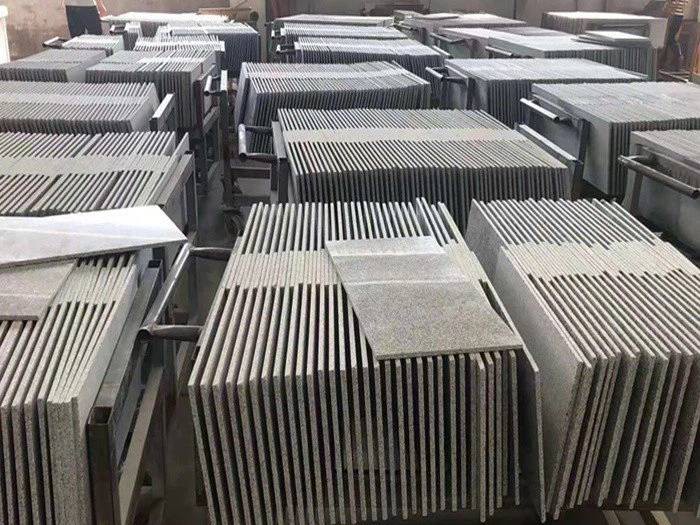
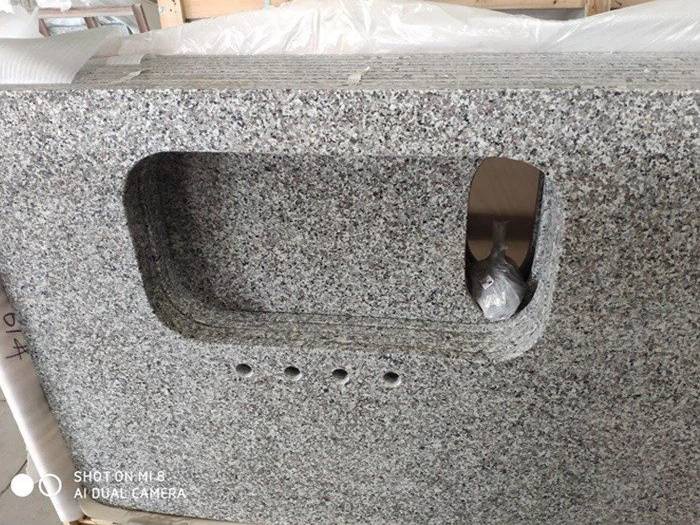
If you're looking for a specific type of grey granite, you might be interested in our Swan Gray Granite Countertop. This granite has a relatively low porosity, making it an excellent choice for kitchen countertops. Another option is our Hazel White Granite, which also has good porosity characteristics, suitable for both indoor and outdoor applications. And for floor tiles, our Grey Granite Floor Tiles are available in a range of porosities to meet different needs.
Conclusion
Porosity is a crucial property of grey granite tiles that can significantly impact their performance, stain resistance, durability, and maintenance requirements. As a supplier, I understand the importance of providing high - quality tiles with the right porosity for each application. Whether you're a homeowner, a contractor, or a designer, choosing the right grey granite tiles based on porosity can ensure the long - term success of your project.
If you're interested in purchasing grey granite tiles for your next project, I encourage you to reach out to discuss your specific needs. We can provide you with detailed information about the porosity and other properties of our tiles, as well as help you select the best option for your application.
References
- Deer, W. A., Howie, R. A., & Zussman, J. (1992). Rock - forming minerals: Vol. 4A. Framework silicates: Feldspars. Longman Scientific & Technical.
- Tucker, M. E. (2001). Sedimentary petrology: An introduction. Blackwell Science.