

What is the light reflectance of Black Quartz Slabs?
Oct 14, 2025
Leave a message
Hey there! As a supplier of Black Quartz Slabs, I often get asked about the light reflectance of these stunning materials. So, I thought I'd take a moment to break it down for you and give you a better understanding of what to expect.
First off, let's talk about what light reflectance actually means. In simple terms, it's the amount of light that bounces off a surface. When it comes to Black Quartz Slabs, their light reflectance can vary depending on a few different factors.

One of the main factors that affects light reflectance is the finish of the slab. Black Quartz Slabs can come in a variety of finishes, including polished, honed, and leathered. A polished finish is the shiniest and will have the highest light reflectance. It gives the slab a mirror-like appearance, which can really make it stand out in a space. On the other hand, a honed finish is more matte and has a lower light reflectance. It gives the slab a softer, more natural look. And a leathered finish has a unique texture that also results in a lower light reflectance compared to a polished finish.
Another factor that can influence light reflectance is the color and composition of the quartz. While we're talking about Black Quartz Slabs, the exact shade of black and the presence of any other minerals or pigments in the slab can impact how it reflects light. Some black quartz slabs may have a more pure, deep black color, which can absorb more light and result in a lower reflectance. Others may have some veining or flecks of other colors, which can add some variation in the way light is reflected.
Now, let's think about how light reflectance can affect the look and feel of a space where Black Quartz Slabs are used. In a small or dimly lit room, a highly reflective polished Black Quartz Slab can actually help to brighten up the space. The light that bounces off the surface can make the room feel more open and airy. For example, if you use polished Black Quartz Slabs for your kitchen countertops, the reflected light can make the kitchen seem less cramped, especially if there aren't a lot of windows.
On the flip side, in a large, well-lit room, a honed or leathered Black Quartz Slab might be a better choice. The lower light reflectance can create a more sophisticated and understated look. It won't be as blindingly shiny, which can be a plus in a space where you want a more relaxed atmosphere. For instance, in a luxury bathroom with lots of natural light, honed Black Quartz Slabs for the vanity tops can add a touch of elegance without being too over-the-top.
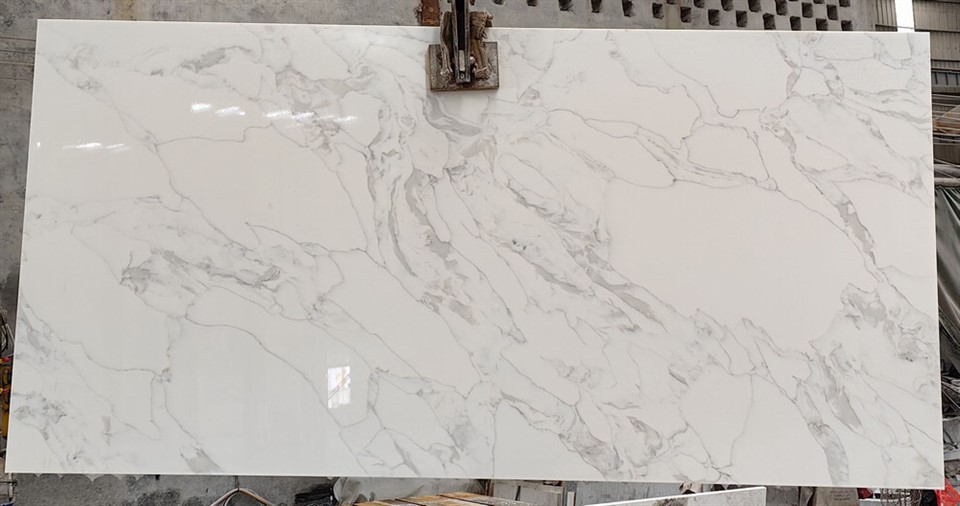
When comparing Black Quartz Slabs to other types of quartz slabs, like Calacatta Davinci, Calacatta Veneto, and Calacatta Quartz Slabs, there are some notable differences in light reflectance. Calacatta quartz slabs typically have a white or light-colored base with gray veining. The light color of the base generally results in a higher overall light reflectance compared to Black Quartz Slabs, especially when they have a polished finish. This can make Calacatta quartz slabs a popular choice for creating a bright and luxurious look in a space.
So, how do you measure the light reflectance of Black Quartz Slabs? Well, there are a few ways. One common method is to use a gloss meter. A gloss meter measures the amount of light reflected at a specific angle from the surface of the slab. The higher the reading on the gloss meter, the more reflective the surface is. However, it's important to note that different manufacturers may use slightly different methods and equipment to measure light reflectance, so the readings can vary a bit.
When you're considering purchasing Black Quartz Slabs, it's a good idea to ask the supplier about the light reflectance of the specific slabs you're interested in. They should be able to provide you with some information, whether it's a gloss meter reading or just a general description of how reflective the slabs are. You can also ask to see samples in person. This way, you can get a real sense of how the slabs will look in different lighting conditions and how much light they'll reflect.
In addition to the aesthetic considerations, light reflectance can also have some practical implications. For example, a highly reflective surface may show fingerprints and smudges more easily. So, if you're using Black Quartz Slabs in a high-traffic area or a place where there's a lot of handling, like a kitchen island, you might want to consider a finish with a lower light reflectance to make maintenance a bit easier.
To sum it up, the light reflectance of Black Quartz Slabs is an important factor to consider when choosing these slabs for your project. It can have a big impact on the overall look, feel, and functionality of the space. Whether you're going for a bright and shiny look or a more subdued and elegant vibe, understanding light reflectance can help you make the right decision.
If you're interested in learning more about our Black Quartz Slabs or have any questions about light reflectance or other aspects of these products, don't hesitate to reach out. We're here to help you find the perfect Black Quartz Slabs for your needs. Whether you're a homeowner looking to renovate your kitchen or a contractor working on a large commercial project, we've got the expertise and the high-quality slabs you're looking for. Let's start a conversation and see how we can make your project a success!
References
- General knowledge of quartz slab properties and light reflectance in the construction and interior design industry.
- Industry reports on the use and characteristics of different quartz slab finishes.