

What is the carving difficulty of China Grey Marble?
Aug 01, 2025
Leave a message
Hey there! I'm a supplier of China Grey Marble, and today I wanna chat about the carving difficulty of this amazing natural stone.
First off, let's talk about what makes China Grey Marble so special. It's got this beautiful, unique grey color that can range from light to dark, with these cool veining patterns running through it. It gives any project a touch of elegance and sophistication. Whether it's for a fancy building facade, a high - end interior floor, or a stunning sculpture, China Grey Marble is a top choice.
Now, let's dig into the carving difficulty. One of the main factors that affect how hard it is to carve China Grey Marble is its hardness. Marble is a metamorphic rock, and China Grey Marble has a certain level of hardness on the Mohs scale. Generally, it's around 3 - 4 on the Mohs scale. This means it's not as hard as some other stones like granite, but it's also not super soft.
The hardness can be both a blessing and a curse when it comes to carving. On one hand, it's soft enough that you can use traditional carving tools like chisels and hammers to shape it. You don't need super high - tech machinery to get started. A skilled carver can use their hands and basic tools to create detailed and intricate designs. But on the other hand, because it's not extremely hard, it can be a bit fragile. If you apply too much pressure in the wrong place, it can crack or chip. So, the carver has to be really careful and have a good feel for the stone.
Another aspect that adds to the carving difficulty is the veining. The veins in China Grey Marble are not just for show; they actually affect the carving process. The veins can be harder or softer than the surrounding stone. When a carver is working on a piece, they have to pay close attention to these veins. If they try to cut through a hard vein with too much force, it can damage the tool or break the stone. And if they're not careful around a soft vein, they might end up carving too much and ruining the design.
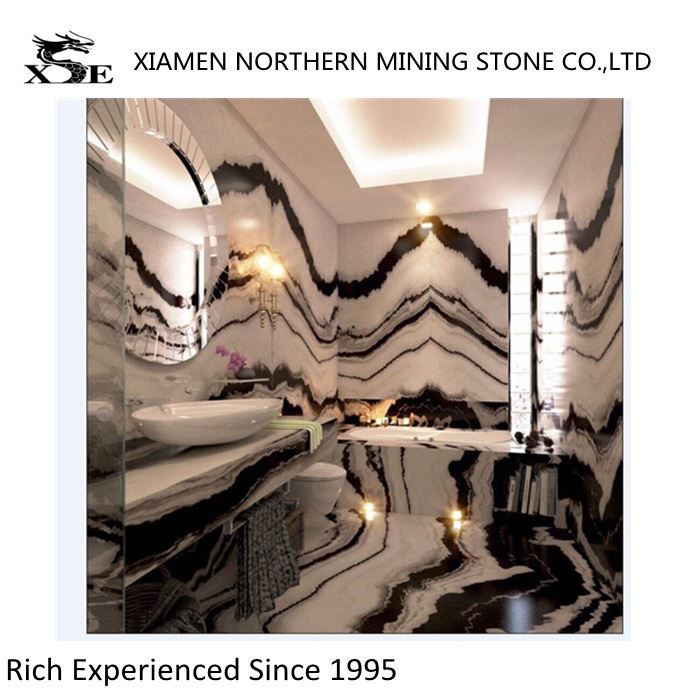
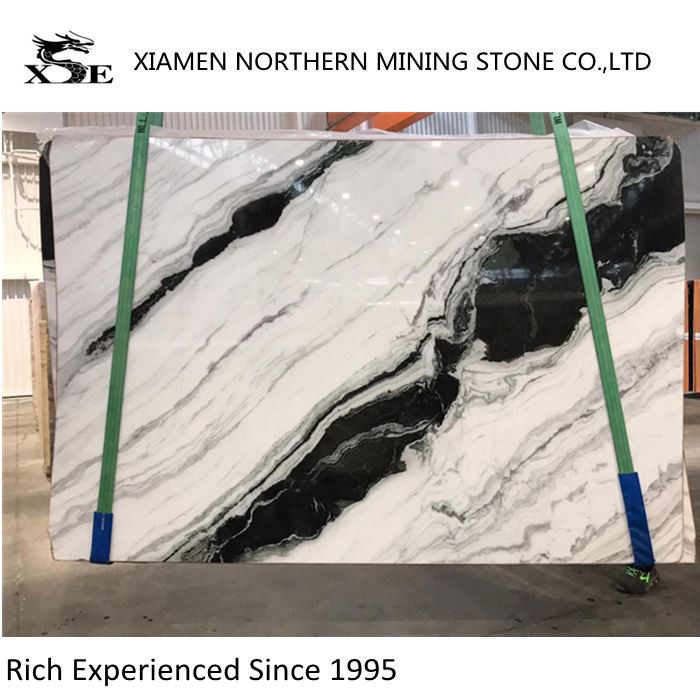
The density of the stone also plays a role. China Grey Marble has a relatively uniform density in most cases, but there can be some variations. Areas with higher density might be more resistant to carving, while lower - density areas can be easier to work with but are also more prone to damage. A carver has to adapt their techniques based on these density differences.
Now, compared to other types of marble, how does China Grey Marble stack up in terms of carving difficulty? Let's take a look at some popular alternatives. For example, the Red Marble Slab. Red marble often has a different mineral composition, which can make it harder or softer than China Grey Marble. In some cases, red marble might be a bit harder, making it more difficult to carve detailed features. You might need more powerful tools and more time to achieve the same level of intricacy.
Then there's the Panda White Marble Slab. Panda white marble is known for its beautiful contrast between white and black areas. The difference in hardness between these two colors can make carving a bit tricky. The black parts might be harder and more brittle, while the white parts are softer. This requires the carver to adjust their approach constantly while working on a piece.
And the Carrara White Marble Slab is another well - known option. Carrara marble has been used by famous artists for centuries. It's relatively soft and has a fine - grained texture, which makes it great for detailed carving. In comparison, China Grey Marble might be a bit more challenging due to its veining and potential density variations.
When it comes to the actual carving process, there are a few steps that a carver has to go through. First, they start with a rough block of China Grey Marble. They use a large chisel and a hammer to remove the excess stone and get the basic shape of the piece. This is called roughing out. It's a relatively fast process, but it still requires skill to make sure the basic shape is right.
Next comes the detailing. This is where the real artistry happens. The carver uses smaller chisels and rasps to create the fine details of the design. They have to be extremely precise and patient. A single wrong move can ruin hours of work.
After the detailing, the piece goes through a finishing process. This can involve sanding the surface to make it smooth and polished. The finish not only makes the piece look better but also protects the marble from damage.
If you're interested in getting some China Grey Marble for your project, whether it's for carving or just for decoration, I'm here to help. I've got a wide range of high - quality China Grey Marble in different sizes and finishes. Whether you're an artist looking for the perfect stone to create a masterpiece or a builder planning a large - scale project, I can provide you with the right materials.
Don't hesitate to reach out if you have any questions or want to discuss your specific needs. We can talk about the quantity, the price, and any customizations you might need. Let's work together to make your project a success.
References
- "Marble: Properties, Uses, and History" by Stone Encyclopedia
- "Carving Techniques for Natural Stones" by Carvers' Journal
- "Comparative Study of Different Marble Types" by Geological Research Institute