

What are the differences between Level 1 White Quartz and milky quartz?
Jul 11, 2025
Leave a message
Hey there! As a supplier of Level 1 White Quartz, I often get asked about the differences between Level 1 White Quartz and milky quartz. So, I thought I'd break it down for you in this blog post.
Appearance
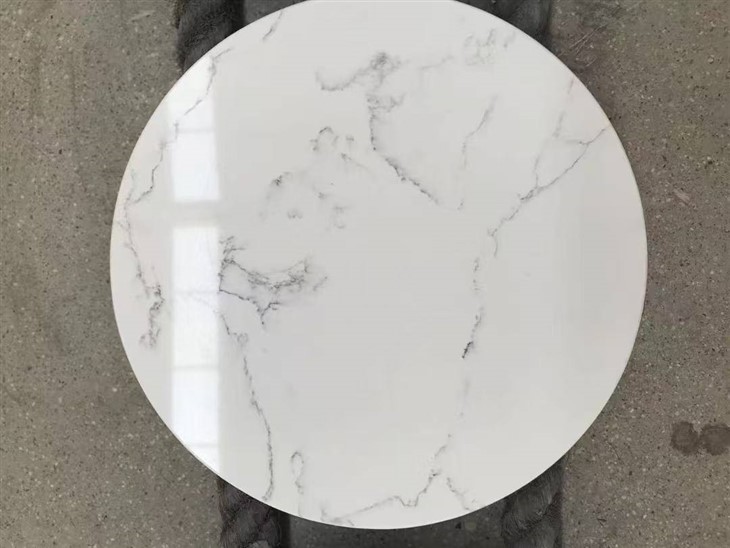
Let's start with how they look. Level 1 White Quartz is known for its pure, bright white color. It's like a clean slate, super smooth, and has a really consistent look. The white is so vivid that it can brighten up any space. This type of quartz is carefully processed to make sure there are no major flaws or color variations. It gives off a high - end, modern vibe, perfect for contemporary kitchens or bathrooms.
On the other hand, milky quartz has a more hazy, cloudy appearance. It gets its milky look from tiny inclusions of water or gas within the quartz crystals. Unlike Level 1 White Quartz, milky quartz doesn't have that uniform, bright white. It has a sort of soft, dreamy quality to it. Sometimes, you might see little swirls or streaks in the milky quartz, which actually adds to its charm. It's more rustic and natural - looking compared to the polished and refined look of Level 1 White Quartz.
Composition
Now, let's talk about what they're made of. Both Level 1 White Quartz and milky quartz are forms of silicon dioxide (SiO₂), which is the main component of quartz. But there are some differences in their composition that affect their appearance and properties.
Level 1 White Quartz is usually engineered. That means it's made by combining natural quartz crystals with resins and other polymers. The natural quartz content is typically very high, often around 90 - 94%. The resins and polymers are used to bind the quartz crystals together and give the stone its strength and durability. This engineered process allows for a more consistent color and pattern, which is one of the reasons why Level 1 White Quartz is so popular for countertops.
Milky quartz, on the other hand, is a natural mineral. It forms in the Earth's crust over long periods of time through geological processes. The inclusions that give it its milky appearance are usually the result of impurities that got trapped during its formation. Since it's a natural stone, its composition can vary depending on where it was mined. There's no added resins or polymers like in engineered quartz, so it has a more organic and unaltered nature.
Durability
When it comes to durability, both have their own characteristics. Level 1 White Quartz is extremely durable. Thanks to the engineered process, it's resistant to scratches, stains, and heat. You can place hot pots and pans on it without worrying about burning the surface, and it's easy to clean. Spills can be wiped away quickly, and it doesn't absorb liquids like some natural stones do. This makes it a great choice for high - traffic areas like kitchens, where it will be exposed to a lot of wear and tear.
Milky quartz is also a fairly hard stone, but it's not as durable as Level 1 White Quartz in some aspects. Since it's a natural stone, it can be more prone to scratches and chips. It also has a higher porosity, which means it can absorb liquids more easily. If you spill something on milky quartz, you need to clean it up right away to prevent staining. And while it can handle normal daily use, it might not be the best option for a kitchen where there's a lot of heavy - duty cooking and movement.
Applications
The differences in appearance and durability also lead to different applications. Level 1 White Quartz is a top choice for countertops. Its bright white color and smooth finish make it look great in modern kitchens and bathrooms. You can use it for kitchen islands, bathroom vanities, and even as wall cladding. It's also a popular choice for commercial spaces like restaurants and hotels, where a clean and stylish look is desired. Check out our Round Quartz Stone Panel and Beige Color Quartz Countertops for some great examples of how Level 1 White Quartz can be used.
Milky quartz, with its more natural and rustic look, is often used in decorative items. It can be made into jewelry, such as necklaces, bracelets, and earrings. The unique milky appearance makes each piece of jewelry one - of - a - kind. It's also used in home decor, like small sculptures or decorative stones. While it can be used for countertops, it's not as common as Level 1 White Quartz because of its lower durability.
Pricing
Pricing is another important factor. Level 1 White Quartz can be a bit more expensive than milky quartz. The engineered process involved in making Level 1 White Quartz requires more technology and resources, which adds to the cost. Also, its high durability and consistent appearance make it a premium product. However, when you consider its long - term benefits, like its resistance to scratches and stains, it can be a worthwhile investment.
Milky quartz is generally more affordable. Since it's a natural stone and doesn't require the same level of processing as engineered quartz, it's often cheaper. But keep in mind that if you use it in a high - traffic area, you might end up spending more on maintenance and repairs over time.
Availability
In terms of availability, Level 1 White Quartz is widely available. As a supplier, I can source and provide Level 1 White Quartz in different sizes and finishes to meet your needs. There are also many manufacturers producing engineered quartz, so you have a lot of options to choose from. You can easily find it in local home improvement stores or order it online. You can check out our Level 1 White Quartz for the best quality and variety.
Milky quartz is also available, but its availability can be more limited. It depends on where it's mined, and there might be some fluctuations in supply. Some regions might have more access to milky quartz than others. And since it's a natural stone, you might not find the exact same pattern or color in every piece.
Conclusion
So, there you have it! The differences between Level 1 White Quartz and milky quartz are quite significant. If you're looking for a durable, consistent, and modern - looking stone for your countertops or other high - traffic areas, Level 1 White Quartz is the way to go. But if you prefer a more natural, rustic look for decorative items, milky quartz might be a better choice.
If you're interested in purchasing Level 1 White Quartz for your project, I'd love to talk to you. Whether you're a homeowner, a contractor, or a designer, I can provide you with high - quality Level 1 White Quartz at competitive prices. Feel free to reach out to start a conversation about your specific needs.
References
- Deer, W. A., Howie, R. A., & Zussman, J. (1992). An introduction to the rock - forming minerals. Longman Scientific & Technical.
- Hughes, R. W. (2009). Gemstones of the world. Courier Dover Publications.