

How do white quartz countertops compare to terrazzo countertops?
Dec 08, 2025
Leave a message
When it comes to choosing countertops for your kitchen, bathroom, or other interior spaces, two popular options that often come under consideration are white quartz countertops and terrazzo countertops. As a supplier of white quartz countertops, I am well - versed in the features and benefits of both materials, and I'm excited to share a detailed comparison to help you make an informed decision.

Composition and Manufacturing
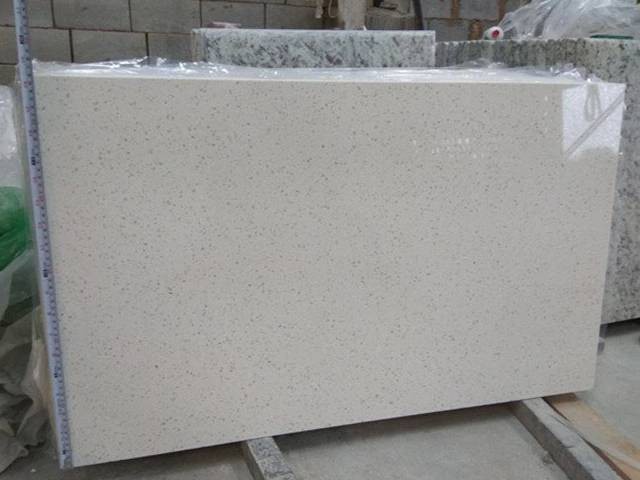
White quartz countertops are engineered stone products. They are typically composed of about 90 - 95% natural quartz crystals, combined with 5 - 10% resins, polymers, and pigments. The manufacturing process involves crushing the quartz crystals, mixing them with the binding agents and pigments, and then pressing the mixture under high pressure and heat to form a solid slab. This process results in a non - porous, dense, and uniform material. For instance, our White Jade Quartz Countertops are crafted using this high - tech manufacturing method, ensuring a consistent and high - quality finish.
On the other hand, terrazzo is a composite material. Traditional terrazzo is made by mixing chips of marble, quartz, granite, glass, or other aggregates with a cement or epoxy binder. The mixture is then poured into place on - site or pre - cast into slabs. Modern terrazzo can also use recycled materials, which gives it an eco - friendly edge. The appearance of terrazzo depends on the type and size of the aggregates used, and it often has a more random, speckled look.
Aesthetic Appeal
One of the most significant draws of white quartz countertops is their consistent and pristine appearance. White quartz offers a smooth, uniform surface that can mimic the look of natural stone like marble but without the associated maintenance issues. Our Level 1 White Quartz provides a pure, bright white backdrop that can make any space feel clean, modern, and luxurious. It comes in a variety of patterns, from subtle veining to more dramatic, bold designs, allowing you to choose the style that best suits your interior design scheme.
Terrazzo, however, has a unique and eclectic aesthetic. The combination of different aggregates creates a one - of - a - kind, textured look. Each terrazzo countertop is like a work of art, with the random arrangement of chips adding character and visual interest. It can give a space a more rustic, industrial, or Mediterranean feel, depending on the choice of aggregates and the overall design concept.
Durability
White quartz countertops are extremely durable. Their high quartz content makes them resistant to scratches, stains, and heat. They can withstand the daily wear and tear of a busy kitchen or bathroom. For example, a hot pan can be placed on a white quartz countertop for a short period without causing damage, although it's still recommended to use trivets to prevent potential discoloration over time. Additionally, because they are non - porous, they do not absorb liquids, which means they are less likely to develop mold, mildew, or bacteria.
Terrazzo countertops are also durable, but they require more maintenance to keep their appearance. Cement - based terrazzo can be porous and may need to be sealed regularly to prevent staining. Epoxy - based terrazzo is more resistant to stains and moisture, but it can still be scratched if sharp objects are dragged across the surface. The aggregates in terrazzo can also become loose over time, especially in high - traffic areas, which may require occasional repairs.
Maintenance
Maintaining white quartz countertops is relatively straightforward. They can be cleaned with a mild soap and water solution or a non - abrasive cleaner. There's no need for special sealants or treatments, and they don't require regular polishing. This low - maintenance aspect makes them a popular choice for homeowners who want a beautiful countertop without the hassle of extensive upkeep.
Terrazzo countertops, as mentioned earlier, need more attention. Cement - based terrazzo should be sealed every 1 - 3 years, depending on the amount of use. Epoxy - based terrazzo may need less frequent sealing but still requires careful cleaning to avoid scratching the surface. Any chips or loose aggregates should be repaired promptly to prevent further damage.
Cost
The cost of white quartz countertops can vary depending on the quality, brand, and thickness of the slab. Generally, they are in the mid - to - high price range. However, considering their durability and low maintenance requirements, they can be a cost - effective long - term investment. Our white quartz countertops offer a great balance between quality and price, providing you with a high - end look without breaking the bank.
Terrazzo countertops' cost also depends on several factors, such as the type of binder (cement or epoxy), the quality of the aggregates, and whether it is pre - cast or poured on - site. On - site poured terrazzo can be more expensive due to the labor involved. In some cases, terrazzo can be more affordable than high - end white quartz, especially if you choose a more basic design and use recycled materials.
Installation
White quartz countertops are typically pre - fabricated in a factory, which means they can be installed relatively quickly. The slabs are cut to size and shape, and the installation process is usually straightforward. Professional installers can ensure a seamless fit, and the countertops can be ready for use soon after installation.
Terrazzo installation can be more complex, especially for on - site poured terrazzo. It requires careful preparation of the surface, precise mixing of the materials, and a skilled installer to ensure a smooth and level finish. Pre - cast terrazzo is easier to install but still needs proper handling to avoid chipping or cracking during the installation process.
Environmental Impact
From an environmental perspective, white quartz countertops have both positive and negative aspects. The manufacturing process uses natural quartz, which is a renewable resource. However, the resins and polymers used in the binding process are often derived from petrochemicals. Some manufacturers are now using more sustainable practices and materials, but overall, the environmental impact of white quartz production can be significant.
Terrazzo, especially when using recycled materials, has a lower environmental footprint. Recycling aggregates reduces waste and the need for new raw materials. Additionally, the cement or epoxy binders can be sourced from sustainable suppliers. Modern terrazzo production methods are also becoming more energy - efficient.
In conclusion, both white quartz and terrazzo countertops have their own unique advantages and disadvantages. White quartz offers a consistent, low - maintenance, and durable option with a modern aesthetic, while terrazzo provides a more artistic, eco - friendly, and cost - effective alternative in some cases.
If you're considering a countertop for your project and are interested in learning more about our white quartz countertops, including White Sparkle Quartz Countertop, please feel free to reach out. We are here to assist you in finding the perfect countertop solution for your needs. Whether you're a homeowner, designer, or contractor, we look forward to discussing your requirements and helping you make the best choice for your space.
References
- "Countertop Materials Guide" by HomeAdvisor.
- "The Complete Guide to Terrazzo" by Tile Council of North America.
- "Quartz Countertops: Everything You Need to Know" by This Old House.