

Can Level 1 White Quartz be used in sound - related applications?
Aug 25, 2025
Leave a message
As a supplier of Level 1 White Quartz, I often receive inquiries about the various applications of this high - quality material. One question that has piqued my interest recently is whether Level 1 White Quartz can be used in sound - related applications. In this blog, I will explore this topic in detail, delving into the properties of Level 1 White Quartz and how they might relate to sound.
Properties of Level 1 White Quartz
Level 1 White Quartz is renowned for its purity and high - grade quality. It is composed mainly of silicon dioxide (SiO₂), which gives it a range of physical and chemical properties. Firstly, it has excellent hardness. On the Mohs scale, quartz typically ranks around 7, making it highly resistant to scratches and abrasions. This hardness also contributes to its durability, allowing it to withstand long - term use in various environments.
In terms of its aesthetic appeal, Level 1 White Quartz has a clean, bright white color that can add a touch of elegance to any space. It is often used in interior design applications such as Blue Quartz Countertop Slabs, Grey Quartz Dining Table Top, and White Sparkle Quartz Kitchen Worktop. Its smooth surface finish not only looks great but also makes it easy to clean and maintain.
Another important property of quartz is its density. Quartz has a relatively high density, which can have implications for sound - related applications. Density plays a crucial role in how materials interact with sound waves. Generally, denser materials tend to have different acoustic properties compared to less dense ones.
Sound - Related Considerations
When it comes to sound, there are several key factors to consider: sound absorption, sound reflection, and sound transmission.
Sound Absorption
Sound absorption refers to the ability of a material to convert sound energy into heat energy. Materials with good sound - absorbing properties can reduce echo and reverberation in a space. For a material to be a good sound absorber, it usually needs to have porous structures or be able to flex and vibrate in response to sound waves.
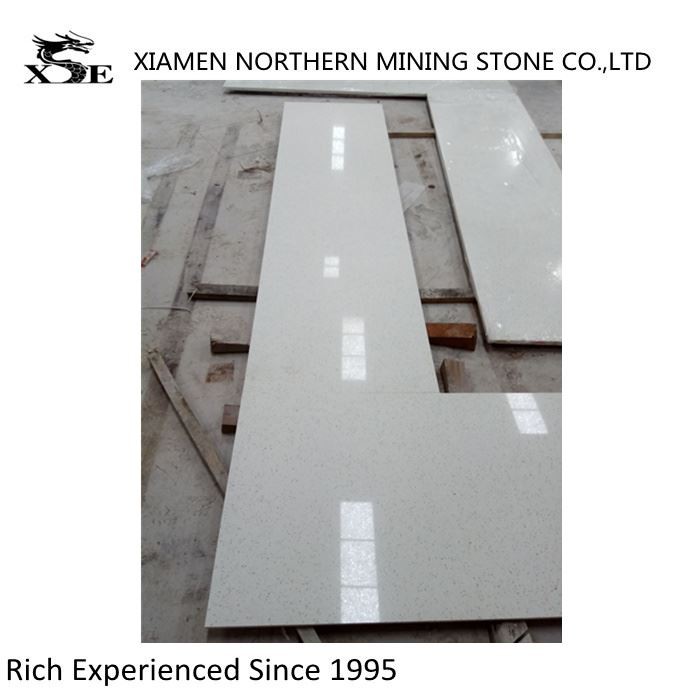
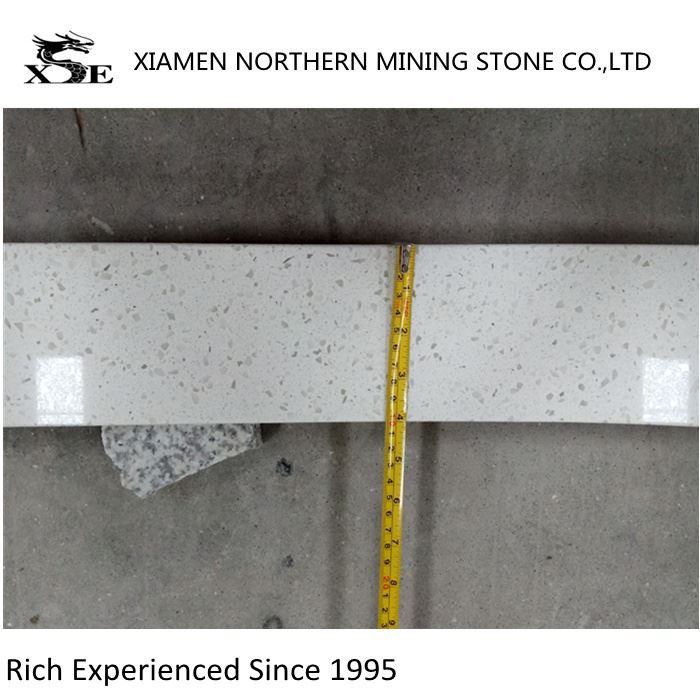
Level 1 White Quartz, being a dense and non - porous material, is not typically considered a good sound absorber on its own. Its smooth and solid structure does not provide the necessary channels or flexibility for sound waves to be effectively absorbed. However, in some cases, if the quartz is used in combination with other sound - absorbing materials, it could potentially be part of a more comprehensive sound - management solution. For example, in a recording studio, if the quartz is used as a surface for a workstation and is backed by acoustic panels, the overall acoustic environment can be improved.
Sound Reflection
Sound reflection occurs when sound waves bounce off a surface. The amount of reflection depends on the material's surface properties and density. A hard and smooth surface like Level 1 White Quartz will reflect a significant amount of sound. This can be both an advantage and a disadvantage depending on the application.
In a concert hall or an auditorium, a certain amount of sound reflection is desirable to create a rich and vibrant acoustic experience. The smooth surface of the quartz can help to direct sound waves in a controlled manner, enhancing the clarity and projection of the sound. However, in a small room, excessive sound reflection can lead to a noisy and echoey environment.
Sound Transmission
Sound transmission refers to the ability of sound to pass through a material. Dense materials like Level 1 White Quartz can provide some degree of sound insulation. The high density of quartz makes it more difficult for sound waves to penetrate, which can be beneficial in applications where noise reduction is important. For example, in a home theater or a recording studio, using quartz partitions or panels can help to isolate the space from external noise.
Potential Sound - Related Applications
Based on the properties of Level 1 White Quartz, there are several potential sound - related applications:
Architectural Acoustics
In large architectural spaces such as concert halls, museums, and convention centers, Level 1 White Quartz can be used as a decorative and functional material. Its reflective properties can be harnessed to enhance the acoustic design of the space. For example, quartz panels can be installed on the walls or ceilings in a specific pattern to direct sound waves towards the audience, improving the overall listening experience.
Home Audio Systems
In home audio setups, Level 1 White Quartz can be used as a base or enclosure material for speakers. The high density of quartz can help to reduce vibrations and resonance, which can improve the sound quality of the speakers. Additionally, the aesthetic appeal of the white quartz can add a touch of luxury to the audio system.
Noise - Isolation Barriers
As mentioned earlier, the density of Level 1 White Quartz makes it suitable for use in noise - isolation barriers. In urban areas or industrial settings, quartz panels can be used to create partitions or walls that block out unwanted noise. This can be particularly useful in offices, schools, and residential buildings located near busy roads or construction sites.
Conclusion
In conclusion, while Level 1 White Quartz may not be a traditional sound - absorbing material, its unique properties make it suitable for a variety of sound - related applications. Its density, hardness, and smooth surface can be utilized to enhance sound reflection, reduce sound transmission, and contribute to the overall acoustic design of a space.
Whether you are an architect looking to create a unique acoustic environment, an audio enthusiast seeking to improve the sound quality of your system, or a property owner in need of noise - isolation solutions, Level 1 White Quartz could be an excellent choice.
If you are interested in learning more about how Level 1 White Quartz can be used in your specific sound - related project or any other application, I encourage you to reach out for a detailed discussion. We can explore the possibilities together and find the best solution for your needs.
References
- "The Physics of Sound" by Thomas D. Rossing.
- "Architectural Acoustics" by Cyril M. Harris.
- "Acoustics: Sound Fields and Transducers" by Leo L. Beranek.