

Are white quartz countertops prone to chipping?
Dec 25, 2025
Leave a message
Are white quartz countertops prone to chipping? This is a question that often arises among homeowners, interior designers, and contractors when considering kitchen or bathroom renovations. As a supplier of white quartz countertops, I've encountered this concern numerous times. In this blog post, I'll delve into the factors that influence the chipping resistance of white quartz countertops, providing you with a comprehensive understanding to help you make an informed decision.
Understanding White Quartz Countertops
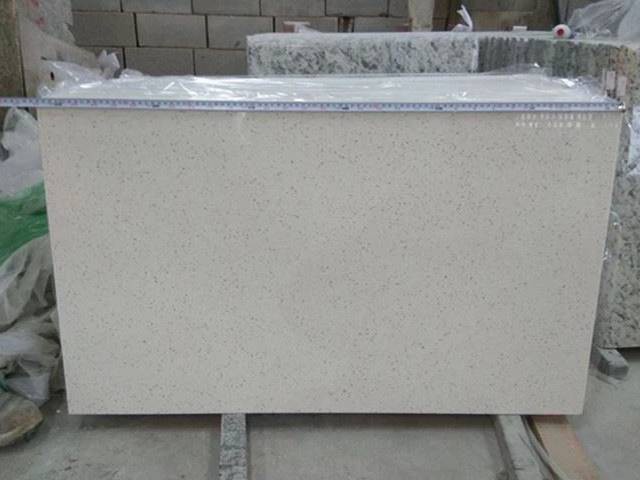
White quartz countertops are engineered stone products composed of approximately 90 - 94% natural quartz crystals, combined with resins, polymers, and pigments. The high quartz content gives these countertops their remarkable strength and durability. The resins and polymers act as binders, holding the quartz particles together and providing additional structural integrity. The pigments are used to achieve the desired white color, which can range from pure white to off - white with various undertones.
There are different types of white quartz countertops available in the market. For instance, the White Sparkle Quartz Countertop features a sparkling appearance, adding a touch of glamour to any space. The Level 1 White Quartz offers an affordable yet high - quality option for those on a budget. And the Beveled Quartz Countertop provides a stylish edge profile that can enhance the overall aesthetic of the countertop.
Factors Affecting Chipping Resistance
Quartz Quality
The quality of the quartz used in the countertop is a crucial factor. Higher - grade quartz has fewer impurities and a more consistent crystal structure. This uniformity allows the countertop to distribute stress more evenly, reducing the likelihood of chipping. Inferior quartz may have weak points or inclusions that can act as starting points for chips when subjected to impact.
Manufacturing Process
A well - controlled manufacturing process is essential for producing a durable countertop. During the manufacturing, the quartz and resin mixture is compacted under high pressure and cured using heat. If the pressure and curing are not done correctly, the countertop may have internal voids or weak areas. These imperfections can make the countertop more susceptible to chipping, especially around the edges.
Edge Profile
The edge profile of the countertop also plays a significant role. Sharp or thin edges, such as a straight edge or a bullnose edge, are more likely to chip compared to rounded or thicker edges. For example, a beveled edge distributes the impact force over a larger area, reducing the stress concentration at any one point. This is why the Beveled Quartz Countertop is often a preferred choice for those concerned about chipping.
Installation
Proper installation is vital for the long - term performance of the countertop. If the countertop is not properly supported or if there are uneven surfaces beneath it, it can create stress points. When an impact occurs, these stress points can cause the countertop to chip. A professional installer will ensure that the countertop is level, well - supported, and securely fastened to prevent such issues.
Usage and Maintenance
How the countertop is used and maintained also affects its chipping resistance. Dropping heavy objects directly on the countertop, using it as a cutting board, or applying excessive force can increase the risk of chipping. Regular cleaning and proper use of coasters and cutting boards can help protect the countertop from damage. Additionally, avoiding harsh chemicals that can damage the resin binder in the countertop is important for maintaining its structural integrity.
Comparing White Quartz to Other Countertop Materials
Granite
Granite is a natural stone that is often compared to quartz. While granite is also very hard, it is more porous than quartz. This means that it can absorb liquids and stains more easily. In terms of chipping, granite can be more prone to it, especially along the edges. Granite has natural fissures and weaknesses in its structure, which can be exacerbated by impacts. Quartz, on the other hand, with its engineered structure, is more consistent and less likely to chip under normal circumstances.
Marble
Marble is a beautiful but relatively soft and porous stone. It is highly susceptible to scratches, stains, and chipping. Marble countertops require regular sealing and careful handling. White quartz countertops are a more practical alternative for high - traffic areas as they are more resistant to both chipping and general wear and tear.
Laminate
Laminate countertops are the most affordable option but are also the least durable. They are made of layers of paper or fabric bonded with resin and a decorative surface layer. Laminate is prone to chipping, peeling, and scratching. In comparison, white quartz countertops offer superior strength and a more luxurious appearance.
Real - World Examples and Case Studies
In many kitchen and bathroom renovation projects, white quartz countertops have proven to be a reliable choice. For example, in a busy family kitchen, a white quartz countertop with a beveled edge has withstood years of daily use without significant chipping. The homeowners were initially concerned about the durability, but after proper installation and following the recommended maintenance guidelines, they have been very satisfied with the performance of the countertop.
Another case involved a commercial restaurant. The restaurant chose white quartz countertops for its durability and easy - to - clean surface. Despite the high volume of activity in the kitchen, the countertops have remained in excellent condition, with only minor scratches that can be easily buffed out. This shows that with the right choice of countertop and proper care, white quartz can be a long - lasting solution even in demanding environments.
Tips to Minimize Chipping
Use Protective Pads
Place protective pads under heavy appliances such as blenders, mixers, and toasters. These pads can absorb the shock and prevent direct impact on the countertop.
Avoid Dropping Heavy Objects
Be careful when handling heavy pots, pans, or other objects near the countertop. If possible, place them on a soft surface or use a tray to transfer them.

Choose the Right Edge Profile
As mentioned earlier, rounded or beveled edges are more resistant to chipping. When selecting a countertop, consider the edge profile that best suits your needs and usage.
Regular Inspection
Periodically inspect the countertop for any signs of damage or wear. Catching small chips early can prevent them from spreading and becoming more significant problems.
Conclusion
In conclusion, white quartz countertops are generally not prone to chipping when they are of high quality, properly installed, and well - maintained. Their engineered structure and high quartz content give them excellent strength and durability compared to many other countertop materials. By understanding the factors that affect chipping resistance and following the tips provided, you can ensure that your white quartz countertop remains in pristine condition for many years to come.
If you're considering white quartz countertops for your next project, I encourage you to reach out to discuss your specific requirements. We can provide you with detailed information about our products, including different colors, edge profiles, and pricing options. Whether you're a homeowner looking to renovate your kitchen or a contractor working on a large - scale project, we're here to help you make the best choice for your needs.
References
- "Countertop Materials Guide" by Home Improvement Magazine
- "The Science of Engineered Stone" by the Stone Industry Research Institute
- "Kitchen and Bathroom Renovation Best Practices" by Interior Design Association